


- Share
- Tweet
Early-stage startups across Africa are invited to apply for the SiGMA Pitch Startup Competition 2027, an international startup competition that gives founders an opportunity to showcase their businesses to investors, venture capitalists, industry leaders and potential partners.
The competition is part of the SiGMA Startup Village and will run across several international SiGMA summits in 2027, including the SiGMA Africa Summit in Cape Town, South Africa, on February 17, 2027.
The Africa edition is expected to bring together more than 100 startups in the Startup Village, while the top six startups selected by the judges will advance to the live pitch competition.
What Is the SiGMA Pitch Competition?
SiGMA Pitch is designed to give promising startups a platform to present their businesses to investors and other stakeholders within the technology, gaming, fintech and related industries.
For the 2027 competition, startups can apply once and may be considered for the SiGMA summit that best fits their business. The competition will be held across seven international summits, including Cape Town, Dubai, São Paulo, Malta, Manila, North America and Rome.
The Africa edition will take place at GrandWest Casino and Entertainment World in Cape Town.
Who Can Apply?
The competition is targeted at early-stage startups, typically from the Seed to Series A stage.
- Have raised no more than €3 million in total funding.
- Be developing an innovative product or service relevant to the SiGMA ecosystem.
- Be available to attend the relevant summit in person if selected.
- Demonstrate a strong business and a clear value proposition.
SiGMA is particularly interested in startups working in areas including:
- iGaming
- Sports betting
- Casino
- Esports
- Affiliate technology
- Artificial intelligence
- Fintech
- Blockchain
- Gaming technology
The wider 2027 competition also highlights areas such as payments, compliance and regtech, applied AI and data infrastructure, sports and creator technology, prediction markets and event trading.
What Selected Startups Will Receive
Startups accepted into the SiGMA Startup Village will receive access to a range of opportunities during the summit.
- One Premium Event Pass.
- Four Standard Event Passes for the team.
- A branded presence within the Startup Village.
- Access to the Startup Lounge and dedicated workspace.
- Invitations to exclusive networking events.
- Opportunities to showcase their businesses to industry delegates.
- Automatic consideration for the SiGMA Startup Pitch competition.
The Startup Village is designed to connect participating startups with investors, operators, affiliates, mentors and other industry stakeholders.
However, being accepted into the Startup Village does not automatically guarantee a place among the six finalists for the live pitch competition.
The Pitch Competition
Following the application period, SiGMA’s judging panel will review eligible applications and select the finalists.
For the Africa edition, six startups will advance to the final live pitch.
- 3 minutes to present the business.
- 5 minutes to answer questions from the judging panel.
The three-minute presentation limit is strictly enforced, including any video used during the presentation.
The startup receiving the highest overall score from the judges will be named the winner of the SiGMA Startup Pitch.
Applicants can also improve their chances of being selected for the Startup Village by submitting a three-minute video introduction as part of their application.
Networking and Investor Exposure
Beyond the pitch itself, the competition provides startups with opportunities to meet investors, venture capitalists, operators, affiliates and other businesses within the SiGMA ecosystem.
Selected startups will also have access to the Startup Lounge, where they can hold meetings and network during the summit. SiGMA also provides PR opportunities through its magazines, website, newsletters and interviews.
For African founders, the Cape Town summit provides a regional platform to present their businesses while connecting with an international audience.
Is There an Application Fee?
No. Applying for the SiGMA Startup Village and Pitch competition is free.
There is no application fee or participation fee for selected Startup Village participants.
However, successful applicants are responsible for their own travel, accommodation, visa costs and other personal expenses associated with attending the event.
Application Deadline
Applications for the SiGMA Africa Pitch 2027 close on January 6, 2027.
The shortlist is scheduled to be announced on January 22, 2027, followed by a pitch-deck submission deadline on February 3. The live SiGMA Africa Pitch competition will take place on February 17, 2027 in Cape Town.
SiGMA Africa Pitch 2027 at a Glance
Competition: SiGMA Pitch Startup Competition
Edition: 2027
Target: Early-stage startups
Stage: Typically Seed to Series A
Funding threshold: No more than €3 million raised
Location: Cape Town, South Africa
Live pitch: February 17, 2027
Finalists: 6 startups
Pitch format: 3-minute presentation + 5-minute Q&A
Application fee: Free
Application deadline: January 6, 2027
How to Apply
Interested startups can submit their applications through the official SiGMA Pitch application page
Apply here:SiGMA Pitch 2027 application page
Applicants should ensure that their business information accurately communicates their product, market, traction and relevance to the SiGMA ecosystem before submitting.
Call for Applications: AFSA African Food Baskets Country Researchers 2026 — Up to $1,000 Grant
NACCIMA, NDE Partner to Boost Youth Enterprise, Industrialization

Business
Sasakawa Africa Calls for More Investment to Help Smallholder Farmers, Agribusinesses

The Sasakawa Africa Association has called for increased government investment in agricultural research, extension and advisory services to help smallholder farmers and agribusinesses adopt new technologies, improve productivity and participate more effectively in growing food markets.
The Nigeria Country Director of SAA, Dr Godwin Atser, made the call during an interview with journalists on the sidelines of the 2026 Africa Food Systems Forum in Kigali, Rwanda.
Atser said agricultural innovation would have limited impact if research findings and technologies did not reach the farmers and agricultural enterprises that needed them.
He urged the government to strengthen agricultural extension systems and create effective channels for transferring innovations developed by research institutions to farmers.
“I think we need to see how the government puts res that have been developed in the research institutes in the country can actually reach the farmer,” he said
For smallholder farmers and agribusiness MSMEs, stronger extension services could provide access to information on improved production methods, climate-smart agriculture, improved seeds and other technologies that can help reduce production challenges and improve business performance.
Atser said stronger extension systems, supported by digital technologies and strategic partnerships, would be essential to closing the gap between agricultural research and adoption at the farm level.
SAA’s interventions in Nigeria currently include regenerative agriculture, market-oriented agriculture, nutrition-sensitive agriculture, capacity building, digital extension and inclusion.
The organisation is also promoting improved seed varieties, climate-smart practices, youth participation and livestock development.
Atser said the 2026 Africa Food Systems Forum had provided SAA with an opportunity to exchange knowledge with agricultural stakeholders, explore complementary initiatives and identify partnerships that could strengthen food systems across Africa.
He said some of the innovative approaches discussed at the forum could be adapted and scaled in Nigeria.
The organisation is also exploring partnerships with governments, research institutions and development partners to expand its programmes. Atser disclosed that SAA had held discussions with the Jigawa State Government on expanding its agricultural interventions in the state.
He also identified the International Rice Research Institute, Somalia and Senegal as potential partners and areas of interest for expanding SAA’s programmes.
Atser noted that funding from the Nippon Foundation remained an importantthat stronger partnerships with state governments and other institutions would be necessary to increase the organisation’s impact
Speaking on Africa’s food systems transformation, Atser said the continent had made progress over the past two decades but continued to face major challenges in tackling hunger and food insecurity.
He called on African governments to increase budgetary allocations to agriculture, noting that only a few countries had achieved the Comprehensive Africa Agriculture Development Programme target of allocating 10 per cent of national budgets to the sector.
He said Nigeria had made progress in the past but needed to accelerate investment and implementation to avoid stagnation in the agricultural sector.
For agricultural MSMEs, increased public investment could have implications beyond primary production, supporting businesses involved in processing, input supply, logistics, storage, livestock, technology and other parts of the agricultural value chain.
Atser also called for greater investment in young people and improved access to digital agricultural services, particularly for smallholder farmers.
According to him, farmers across different categories need access to relevant information, technologies and advisory services to build more resilient, productive and inclusive food systems.
For Nigeria’s growing agribusiness ecosystem, connecting farmers to research, digital tools, markets and business support could help turn agricultural innovation into stronger enterprises, increased productivity and new employment opportunities.
Business
Unilever Nigeria, Customs Partner to Combat Counterfeit Trade
Unilever Nigeria Plc and the Nigeria Customs Service have signed a Memorandum of Understanding to strengthen efforts against counterfeit and illicit trade, protect consumers and promote legitimate businesses across Nigeria.
The strategic partnership establishes a framework for collaboration aimed at improving supply chain visibility and ensuring that authentic and verified products reach consumers across the country.
Counterfeit products continue to pose significant risks to consumers and businesses by threatening public health, weakening consumer confidence, distorting competition and reducing government revenue.
Speaking at the signing ceremony, the Managing Director of Unilever Nigeria Plc, Tobi Adeniyi, described the partnership as an important milestone in the company’s efforts to combat counterfeit products and protect the integrity of the market.
“Counterfeiting poses a significant threat to public health, businesses, and the broader economy. It undermines consumer trust and creates an uneven playing field for legitimate businesses,” he said.
Adeniyi added that the partnership reflects Unilever Nigeria’s commitment to protecting consumers and preserving the integrity of the Nigerian marketplace.
The Comptroller-General of the Nigeria Customs Service, Bashir Adewale Adeniyi, said the agency would implement the agreement transparently and professionally in line with its mandate.
He stressed that combating counterfeiting and other forms of illicit trade required collaboration between government agencies and private-sector organisations.
“The fight against counterfeiting and other forms of illicit trade cannot be won by one organisation acting alone,” he said.
According to him, partnerships between the public and private sectors are important because they combine their respective strengths to protect consumers, strengthen legitimate trade and support economic growth.
He added that the collaboration with Unilever would help give Nigerians greater confidence in the products they purchase while contributing to the integrity of the country’s markets.
For legitimate businesses, particularly manufacturers and MSMEs operating within the formal economy, stronger measures against counterfeit products could help create a more level playing field by reducing unfair competition from illicit operators.
The partnership is also expected to contribute to improved supply chain monitoring and stronger enforcement against businesses involved in the distribution of counterfeit and illicit products.
Both organisations expressed their commitment to translating the agreement into tangible measures that protect consumers, support compliant businesses and strengthen Nigeria’s legitimate trade ecosystem.
Business
ACBF, Gates Foundation Urge Africa to Invest in Public-Sector Leadership

The African Capacity Building Foundation and the Bill & Melinda Gates Foundation have called for increased investment in leadership development across Africa’s public sector, saying technical expertise, sound policies and strong institutional systems alone cannot guarantee sustainable reforms.
The organisations made the call during a webinar organised by ACBF on “Leading Public Sector Transformation in Africa: Leadership Lessons from the LEAPS Programme.”
The webinar examined how stronger leadership capacity could help African governments overcome resistance to reforms, improve public financial management and translate policy initiatives into measurable institutional results.
Speaking at the event, the Executive Secretary of ACBF, Mamadou Biteye, said public-sector reform was rarely held back by a lack of good ideas but was often limited by the ability of leaders to manage change, build trust, coordinate stakeholders and sustain reform efforts.
He noted that African governments were implementing ambitious public financial management reforms aimed at increasing domestic regeting and enhancing expenditure management
However, Biteye said progress remained uneven, with leadership, coordination and implementation continuing to pose major capacity challenges across the continent.
He said these challenges informed the creation of the Leadership Excellence for Africa’s Public Sector (LEAPS) programme by ACBF, with support from the Gates Foundation.
According to him, the programme was built on the understanding that technical expertise, while essential, is not enough to deliver complex institutional reforms.
“Reform leaders must do more than understand systems; they must inspire people, build trust, navigate competing interests, manage resistance, and sustain momentum when reforms become difficult,” he said.
Unlike conventional training programmes, LEAPS combines structured leadership learning with self-assessment, personal development plans, individual and group coaching, peer learning, technical seminars and case-based application to real public financial management challenges.
Senior Programme Officer, Development Policy and Finance at the Gates Foundation, Adil Ababou, said the organisation’s experience working with ACBF through LEAPS had highlighted three key lessons about public-sector reform.
The first, he said, was that institutions and systems do not reform themselves; people lead reforms.
Ababou explained that many challenges facing public finance officials were not purely technical but involved building consensus around difficult reforms, managing resistance, working across institutional boundaries and maintaining momentum during changing political and economic circumstances.
He said effective public financial management was particularly important because decisions made by ministries of finance, revenue authorities, treasuries and other public institutions ultimately affect governments’ ability to finance education, healthcare, social protection and other essential services.
“In the context of abrupt aid cuts, government finance is now, more than ever, the backbone of sustained and nationally owned development,” he said.
Ababou identified ownership as the second major lesson from the LEAPS programme.
He explained that the programme does not impose predetermined reforms or solutions on participating countries. Instead, it begins by identifying the capacity needs of participating institutions and provides sustained coaching while allowing participants to define the problems they want to solve and the outcomes they want to achieve.
He said this approach was becoming increasingly important as African countries placed greater emphasis on policy ownership, national sovereignty and defining their own development priorities.
The third lesson is that leadership cannot remain an individual capability
“Successful reform requires teams, institutions and networks of officials who are able to work across the administrative silos that often characterise government,” he said.
He noted that individual reformers could achieve greater impact when their institutions provided room for action, senior leaders supported their initiatives and they were able to build coalitions around change.
“That is when individual leadership can start generating institutional momentum,” he said.
The LEAPS programme is a six-month executive leadership development initiative delivered through ACBF’s Ubora Academy.
Since its launch in 2024, the programme has enrolled more than 295 participants across eight African countries, including Côte d’Ivoire, The Gambia, Ghana, Kenya, Nigeria, Senegal, Tanzania and Zimbabwe.
The programme combines self-paced online learning with live facilitated sessions, executive coaching, group mentoring, technical seminars and peer exchange.
Its five modules cover African leadership paradigms; self-awareness and emotional intelligence; leading high-performing and inclusive teams; driving strategic organisational change; and engaging stakeholders and driving systemic transformation.
Biteye said early evidence from the first cohort indicated that participants were already applying their leadership skills to improve institutional performance.
In Kenya, for instance, participants demonstrated how people-centred leadership could complement technical expertise in advancing digital public financial management reforms and securing stakeholder support.
The organisations said continued investment in leadership capacity would be critical to helping African governments implement complex reforms, strengthen public institutions and build more resilient and sustainable economies.

Business4 years agoBREAKING: CBN announces New Withdrawal Policies, Pegs ATM Withdrawals Limit at N20,000 daily, N100,000 weekly
Business6 years agoFirst Bank Nigeria Joins SME Finance Forum
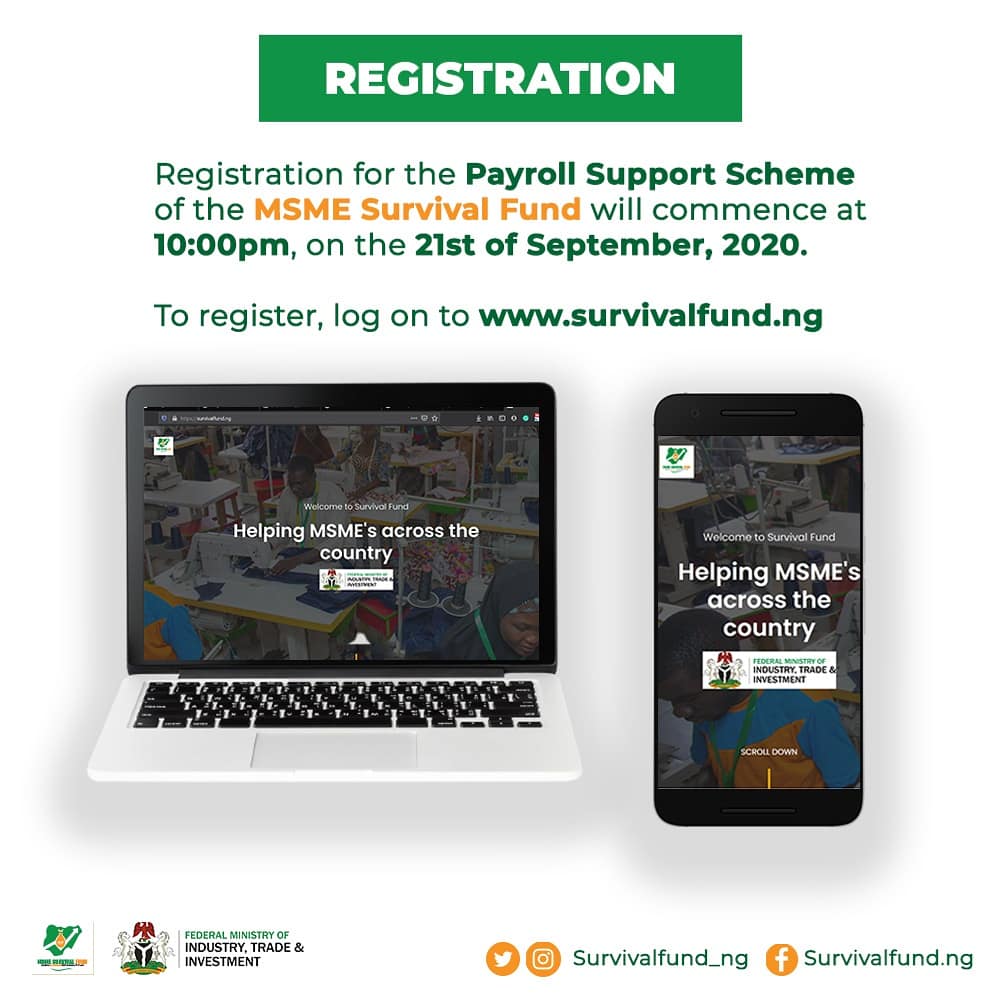
Business6 years agoFG Opens Application Portal for N75 Billion MSME Survival Fund 10pm Today, Releases Time-table for Payroll Support Scheme for different sectors

Business3 years agoCall for Applications: MTN ICT and Business Skills Training (N90 Million Grant for 300 Participants)
Business6 years agoHow to apply and benefit from free CAC Business Name Registration for 250,000 MSMEs
- Business4 years ago
Call for Applications: Rural Youth Skill Acquisition Programme for Nigerian Youths (receive N50,000 monthly stipend)

Articles & Resources6 years agoHow to put your house in order for tax purposes
- Business4 years ago
Call for Applications: Tony Elumelu Foundation Entrepreneurship Programme 2023 for African Entrepreneurs (get $5,000 seed funding)
