

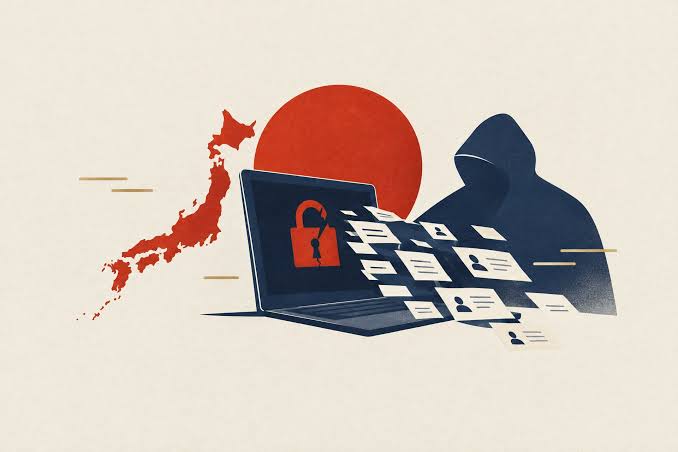
Japan’s Ministry of Internal Affairs and Communications (MIC) has issued a cybersecurity warning to companies operating websites and mobile applications following multiple data breaches linked to weak security measures. The ministry has urged businesses, particularly those handling personal information, to address vulnerabilities and strengthen protection against unauthorised access.
Why Has Japan Issued a Warning?What Caused the Data Breaches?How Is AI Increasing Cyber Risks?What Should Companies Do?Who Is Responsible for Security?Why Does the Warning Matter?
Why Has Japan Issued a Warning?
The ministry issued the alert, highlighting repeated cybersecurity incidents involving organisations that failed to implement basic security safeguards.
The warning follows a similar communication from Japan’s National Center of Incident Readiness and Strategy for Cybersecurity (NISC), operating under the Cabinet Secretariat.
FCRF’s Chief AI Officer Certification Returns on November 14 to Prepare Future AI Leaders
MIC has extended the advisory to businesses and organisations under its jurisdiction, emphasising the need for stronger protection of websites, mobile applications and personal data.
What Caused the Data Breaches?
According to the ministry, several data breaches occurred because organisations had not adequately addressed common cybersecurity weaknesses. These included insufficient security measures during application development, incorrectly configured websites and unresolved software vulnerabilities.
The ministry also raised concerns about attackers combining several weaknesses to gain unauthorised access. Security flaws that appear relatively minor individually can become more serious when exploited together, potentially allowing attackers to compromise systems and access sensitive information.
How Is AI Increasing Cyber Risks?
The ministry highlighted the possibility of cybercriminals using artificial intelligence to conduct reconnaissance and identify weaknesses in digital systems. AI-assisted techniques could also help attackers identify potential entry points and carry out intrusions.
As these capabilities develop, cyberattacks may become easier to scale, increasing risks for businesses of different sizes. The ministry cautioned that organisations should strengthen existing security controls rather than assume smaller operations are less likely to be targeted.
What Should Companies Do?
Businesses have been urged to identify and fix known vulnerabilities, correct security misconfigurations and regularly examine their digital infrastructure. The advisory specifically calls for continued security assessments and monitoring even after websites and applications have been launched.
Organisations should also incorporate cybersecurity safeguards during the initial design and development stages instead of addressing weaknesses only after systems become operational. These measures are intended to reduce the opportunities available to attackers seeking unauthorised access.
Who Is Responsible for Security?
MIC has emphasised that cybersecurity responsibility extends beyond technical teams to company management.
Business leaders have been encouraged to review their organisations’ complete technology operations, including systems managed internally and those handled by external service providers.
Where development or operational activities are outmented by their vendors. The ministry has urged management to take an active role in identifying security gaps and ensuring that appropriate safeguards are maintained
Why Does the Warning Matter?
The advisory draws attention to the risks created when businesses expand their digital services without maintaining essential cybersecurity controls.
Weak application security, unpatched software and incorrect system configurations can expose organisations to unauthorised access and potential data breaches.
Japan’s warning reinforces the importance of continuous monitoring, secure software development and management oversight, particularly for organisations responsible for protecting customers’ personal information. The emphasis remains on preventing avoidable security failures before attackers exploit them.
