

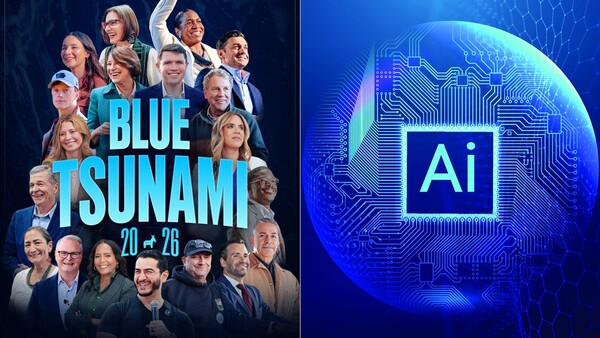
With Democrats securing majorities in both chambers of Congress in the U.S. midterm elections, big tech companies that have been closely aligned with President Donald Trump are moving to restore ties with the Democratic Party. Expectations are rising that political pressure will grow over tighter AI regulation and data centre construction.
According to IT outlet TechCrunch, major technology companies including Meta and OpenAI have begun expanding their points of contact with Democrats around the midterm elections.
Over the past 2 years, Silicon Valley companies built friendly ties with the Trump administration. Some executives donated large sums to political fundraising groups backing Republican candidates, and companies scaled back diversity, equity and inclusion (DEI) policies. The administration also pursued pro-business policies such as tax benefits and easing AI regulation.
That changed after Democrats won the midterm elections
That changed after Democrats won the midterm elections on Nov. 3, local time. Democrats are signaling tougher oversight of the AI industry and tighter data centre regulation.
OpenAI hired Jessica Schumer, the daughter of Democratic Senator Chuck Schumer, as a policy executive in September. More recently, it also proposed referring to data centres as AI compute campuses. J.B. Branch of consumer group Public Citizen criticised the moves as a public relations strategy to improve the company’s image.
Meta also stressed the need for bipartisan cooperation. Meta President Dina Powell McCormick said the company must work with an elected government and communicate with both parties to win support for corporate activity.
Even so, it is unclear whether improved ties
Even so, it is unclear whether improved ties will lead to looser regulation. Experts said the focus of AI regulation is likely to shift from the federal government to state governments and local communities.
Power consumption by data centres and their locations have emerged as key issues. In some areas, discussions of limiting construction are expanding due to opposition from residents.
The Trump administration issued an executive order last December responding to state government AI regulation, but several states introduced laws related to chatbots and deepfakes.
Policy experts expect that over the next 2
Policy experts expect that over the next 2 years, AI rules applied to big tech could vary depending on the areas where businesses actually operate, rather than on legislation in Washington.
About the Author
Choi Jae-wonittt_0801@d-today.co.kr
Keyword
#Democratic Party#Donald Trump#Meta#OpenAI#AICopyright © DigitalToday. All rights reserved. Unauthorized reproduction and redistribution are prohibited.
