

If you’ve noticed consumer electronics prices climbing higher, you’re not imagining things. And you can thank — you guessed it — the AI boom.
The global effort to scale up AI data centers has dramatically increased demand for critical memory and storage chips, leading to a worldwide shortage that’s sent component costs skyrocketing.
To offset that and to protect margins, consumer tech manufacturers are raising prices on everything from smartphones and tablets to laptops and game consoles by as much as 30% in some instances.
What’s more, even when the memory and storage shortage inevitably eases, device prices may stay elevated.
“I don’t think pricing ever goes back to 2025 levels,” explained Jitesh Ubrani, director at market research firm International Data Corporation.
“You may see very slight reductions … but it’s still going to be elevated compared to what it was last year, and probably compared to what it is even today.”
Memory distortion
The AI-driven memory crisis is the result of a confluence of factors.
First, there are three major memory makers in the world — Micron (MU), SK Hynix (SKHY), and Samsung (005930.KS) — and they can only produce so many chips at a time.
The memory and storage industries are also coming off steep declines post-COVID. Sales initially grew during the pandemic as lockdowns set in and people and companies bought up new computers, smartphones, and servers. But that pulled future sales forward, and the market revenue plummeted shortly thereafter.
In 2023, Micron reported net income of -$5.8 billion. It saw income of $8.6 billion in the year prior. SK Hynix saw similar results, with operating margins collapsing to -24% and net income hitting -9.1 trillion won.
To address the declines, memory companies scaled back their expansion plans. That left them with fewer factories to produce memory as the AI boom kicked off.
Compounding the problem is the fact that consumer memory and data center memory use the same base component called DRAM, or dynamic random-access memory.
Phones and game consoles use a type of DRAM called DDR, or double-data-rate DRAM. DDR comes in different flavors, including graphics DDR (GDDR) for gaming and low-power DDR (LPDDR) for phones and other mobile devices.
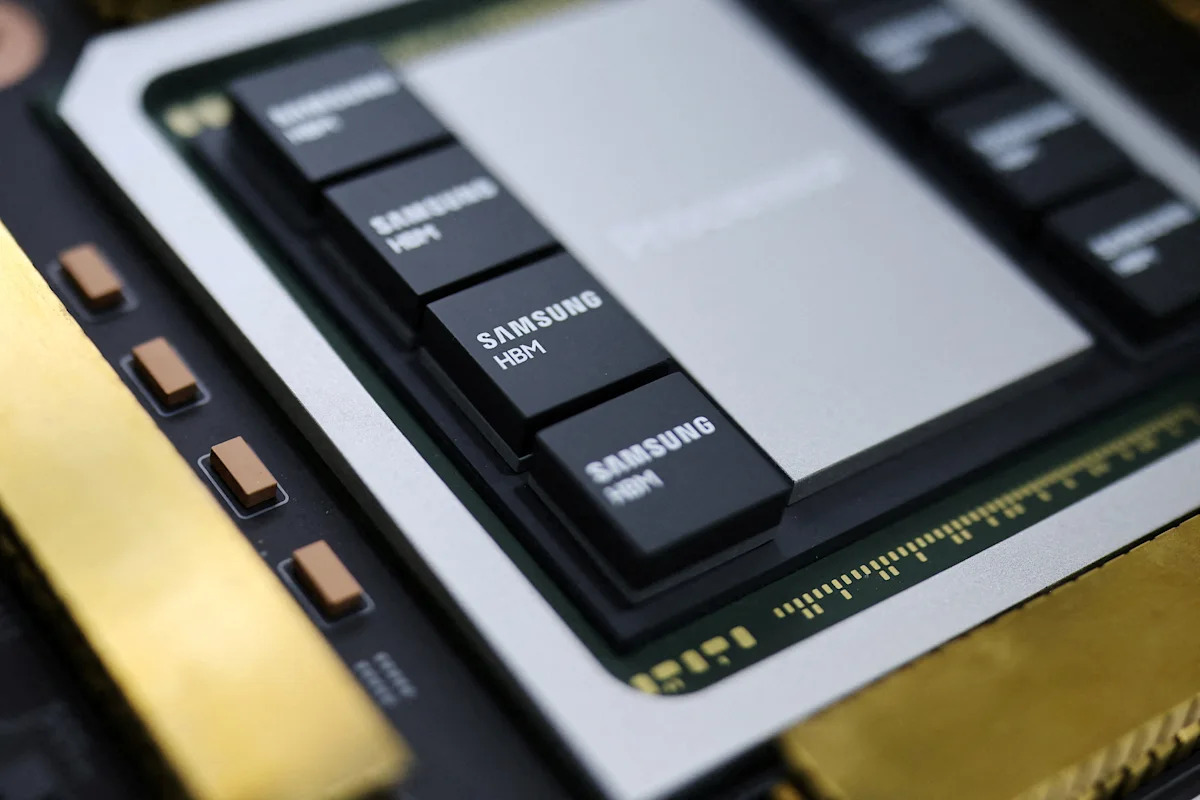
Data centers, meanwhile, use high bandwidth memory (HBM), which is essentially multiple DRAM chips stacked on top of each other.
To keep up with data center orders, some memory makers are allocating more of their fabrication lines to HBM, which is squeezing out DRAM and putting pressure on consumer goods.
