

The U.S. National Science Foundation is investing $90 million over five years to support three new NSF Science and Technology Centers (NSF STC). These centers will advance American leadership in science and technology, strengthen the nation’s STEM workforce, and accelerate innovation in fields ranging from artificial intelligence and biotechnology to fusion energy and robotics.
The three centers will bring together researchers from universities, national laboratories, industry, and other partners to pursue ambitious, collaborative research. Each center will receive approximately $6 million annually for an initial five-year period, with the opportunity to compete for up to five additional years of support.
“Maintaining the United States’ leadership in science and technology requires bold research, strong partnerships, and a skilled workforce,” said Brian Stone, performing the duties of the NSF Director. “As advances in foundational science and technology open new possibilities, these Science and Technology Centers will help American researchers seize those opportunities, accelerate scientific discovery, and develop the talent and technologies needed to turn innovation into solutions that benefit the American people.”
Since its inception in 1987, the NSF STC program has driven the emergence of new fields of discovery, catalyzed strong partnerships, advanced breakthrough technologies, sparked numerous start-up companies, and trained generations of researchers and innovators. The program supports large-scale, transformational research that opens new areas of discovery and drives technological innovation. By combining expertise across organizations and partnering with industry and other groups, STCs tackle complex, high-risk challenges in foundational research and help move promising ideas toward real-world benefits. The centers also strengthen the nation’s scientific and technical workforce by providing students and early-career researchers with hands-on experience in emerging fields and technologies.
The three Science and Technology Centers include:
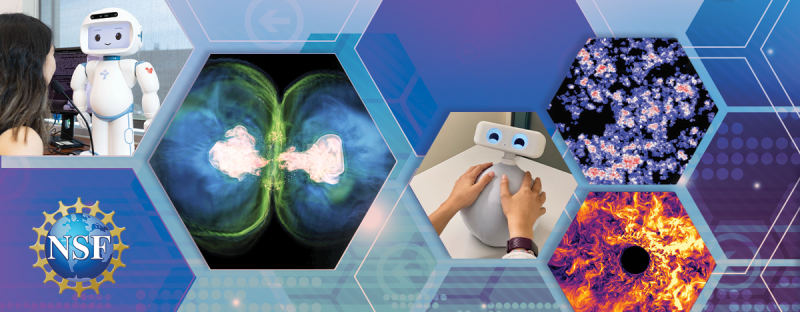
- The Center for Transformative Explorations in Multi-Physics and Engineering of Scientific Turbulence (TEMPEST), led by Michigan State University, aims to tackle one of the most challenging problems in physics and engineering: understanding and controlling turbulence. Turbulence is the chaotic, multiscale motion of fluids and plasmas and plays a critical role in fusion energy and national security applications, yet scientists still cannot reliably predict how complex turbulent systems behave across vastly different scales. TEMPEST will combine advanced experiments, mathematical modeling, high-performance computing, and AI to develop more accurate and reliable physics-grounded models that could accelerate fusion energy development, strengthen the scientific foundations of national security technologies, and drive innovation across science and engineering.
- The Center for Genome Intelligence Engineering (GENIE), led by Northwestern University, will develop new ways to understand cell function with the goal of learning to prevent and potentially reverse declines in cell function. Researchers will study how DNA is organized in 3D, which helps determine each cell’s identity and function. Changes in this physical organization can contribute to illnesses such as Alzheimer’s disease, cardiovascular disease, and cancer. GENIE aims to develop innovative technologies for 3D DNA engineering and generate new knowledge that can be used to help cells and tissues withstand damage, restore lost functions, and return to a healthier state, leading to major advances in biotechnology and biomedicine.
- The Center for Human and Robot Co-Adaptation, led by The University of Texas at Austin, will study how people and robots can securely and effectively adapt to one another as service and assistive robots become more common in homes, hospitals, workplaces, and public spaces. Researchers will combine robotics, AI, and human factors to develop new methods that help robots with embodied intelligence learn from people, understand their needs and preferences, and, in turn, adapt physically and cognitively to changing environments and different people. The center aims to advance secure, useful robotic technologies that can support independent living, healthcare, and other human-centered services.
These investments in the STC program advance priorities outlined in recent White House and Office of Science and Technology Policy guidance, including the White House <a href="https://www.whitehouse.gov/wp-content/uploads/2025/09/M-25-34-NSTM-2-Fiscal-Year-FY-2027-Administration-Research-and-Development-Budget-Priorities-and-Cross-Cutting-Actions.pdf” rel=”nofollow noopener” target=”_blank”>”Fiscal Year 2027 Administration Research and Development Budget Priorities and Cross-Cutting Actions” and “Ushering in a New Golden Age of American Innovation: Fiscal Year 2028” memoranda. The class of 2026 STCs focus on strengthening foundational research, advancing critical and emerging technologies, developing the science and technology workforce, and translating discoveries into technological advances and national benefits. STCs provide a uniquely effective framework for advancing these priorities by building sustained partnerships across universities, industry, and government and accelerating the use of new ideas and technologies for scientific discovery.
Research areas
Office of Integrative Activities (OD/OIA)
Directorate for Biological Sciences (BIO)
Directorate for Mathematical and Physical Sciences (MPS)
Directorate for Engineering (ENG)
