
Also: OpenAI CEO Sam Altman expressed his surprising sympathy over the construction of datacenters across the country
Hello, and welcome to TechScape. I’m Blake Montgomery, US tech editor at the Guardian, writing to you from a sunny park in New York City, which was supposed to endure rain all weekend but in fact delivered the best weather of the year.
Why Meta’s big American backlash happened in court
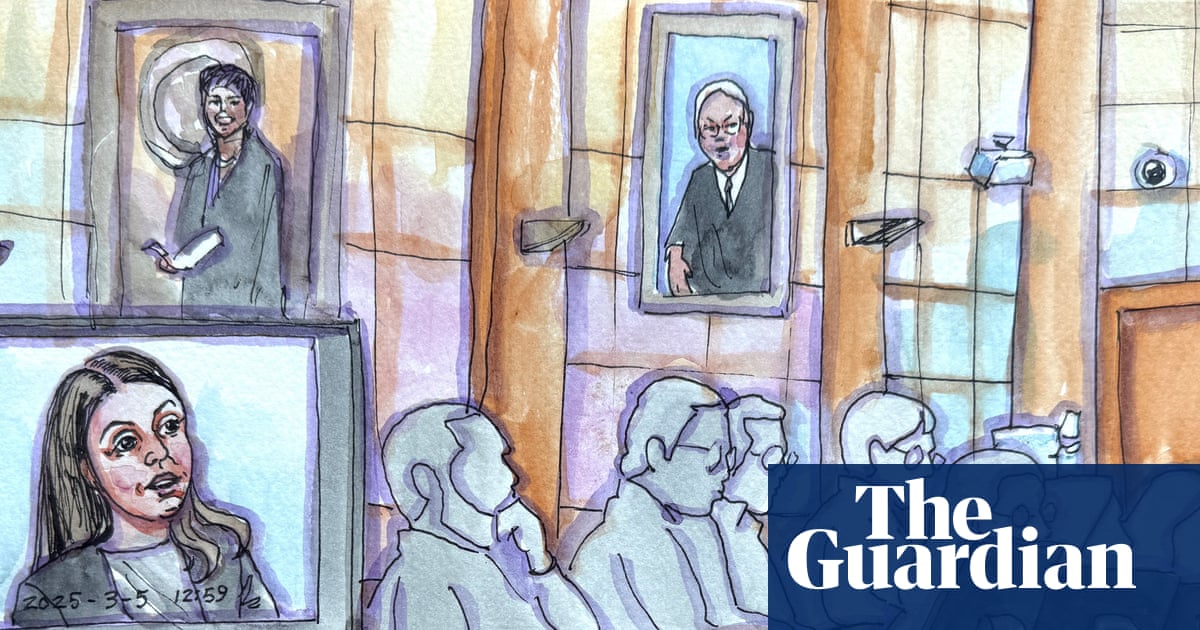
A blockbuster case against Meta went to trial a week ago in Oakland, California, just north of the US tech company’s headquarters in Silicon Valley. California and 28 other US states are suing the £1tn ($1.36tn) company for allegedly designing products that are addictive for children, and hiding that information from the public.
The courtroom has already seen minor fireworks. On the witness stand, a whistleblower who worked extensively with Mark Zuckerberg accused the CEO of lying to the public about his commitment to child safety. The prosecutor who opened the case framed her argument around four words that start with the letter H: Meta “hooks” in users, “holds” them on its platforms for as long as possible, “harvests” their data and then “hides” the truth from the public. She contended that this business model “worked especially well for kids”. More pyrotechnics are expected. Zuckerberg himself is expected to face tough questions on the stand, as is the CEO of Instagram.
Meta has denied all allegations. Liza Crenshaw, a spokesperson for the company, said: “Rather than sticking to the facts or the law, the states have instead decided to chase an outlandish payout.”
The trial presents a major challenge for Meta, not in the least, because in the United States, it’s proceedings like these that regulate the tech industry.
China regulates tech by crackdown; the UK and Europe regulate the industry with legislation – Brussels’ prescriptive stipulations have become global defaults. But in the US, it’s mostly the courts that set the boundaries. They move much faster and with the vindictive authority that Americans often crave in response to harms. The slow wheels of democratic debate and bill drafting feel ill-suited to respond to Zuckerberg’s mantra of “move fast and break things”.
Meanwhile, US regulators have famously, obviously, and avowedly had difficulty keeping pace with the innovations that arise from Silicon Valley. As one Republican representative told a quantum computing expert during a 2018 hearing on Capitol Hill: “I can understand about 50% of the things you say.” Members of Congress would undoubtedly say the same about AI today.
“Courts have the ability to force these changes much quicker than legislation. Courts have this authority to say, ‘Look, you either comply with these orders … or you stop doing business in our state’. States have the ability to enforce that. I think for these companies this is a real point of reckoning,” said Laura Marquez-Garrett, an attorney with the Social Media Victims Law Center, which is representing individual plaintiffs suing Meta and other social media companies in thousands of cases in California. Her organization was deeply involved in Meta’s first loss of a social media addiction trial in March in Los Angeles.
Will this trial bring Meta’s moment of accountability? Maybe.
Other tech companies have faced significant government lawsuits in recent years, and come away only stronger. Google faced perhaps the most significant antitrust litigation of the 2020s, losing its antitrust case against the US Department of Justice last year. The penalty was not divesting the Chrome browser but a “slap on the wrist”, critics said.
But in the 1990s, a coalition of US states sued tobacco companies and secured a settlement that banned a laundry list of marketing tactics, including advertising on transit or anywhere outdoors, paid product placement for cigarettes, cartoon mascots, branded apparel and nearly all free distribution of cigarettes. You’d never see a tobacco company’s name on a US sports stadium today.
Like those tobacco suits, the states’ suit against Meta may force the company to operate its social networks in less harmful ways and to keep them out of the hands of children. The states are explicitly asking the court that Meta be forced to change the design of its products to make them safer for children.
“These AGs have a real chance at fixing the product,” said Marquez-Garrett.
OpenAI makes safety moves
-
‘We are hitting a different chapter’: OpenAI leader warns of threat of ‘persistent’ AI cyber-attacks
-
OpenAI announces slowing pace of development after hack by rogue agent
-
OpenAI launches ChatGPT for Teens with stronger safeguards
The week the US data center backlash reached a fever pitch
The political champions of datacenters in the US are turn coatings to detractors. It’s knives out in the US datacenter backlash.
Democrats who fast-tracked the development of these gargantuan fortresses of AI are now implementing restrictions on them. Republicans who trumpeted calls for their unrestricted construction are hastily rolling out plans to constrain them.
Josh Shapiro, Democratic governor of Pennsylvania, rolled out restrictions for large datacenters last week. Just two months ago, the Guardian reported on how he was fast-tracking them and cutting red tape. Greg Abbott, Republican governor of Texas, said this weekend that the datacenter industry has “dug its own grave”. In November 2025, he called his state the “epicenter of AI development”. A Republican running for a contested Senate seat in Texas, Ken Paxton, debuted an anti-AI action plan over the weekend, though it was marked as “made with AI” on X.
skip past newsletter promotion
It’s no wonder: more than 70% of Americans oppose the construction of datacenters in their cities, per a poll released by Gallup three months ago. In just one year, the percentage of respondents saying they “strongly oppose” a datacenter being built near their homes more than doubled, according to polling by the climate news group Heatmap.
Conservative media in the US has likewise taken notice. Fox News on Thursday: “Silicon Valley is losing the datacenter fight, risking a repeat of a classic failure.” The Daily Wire, often a bellwether for young Republicans’ opinions, on Monday: “Silicon Valley created the datacenter backlash.”
Donald Trump, always liable to turn on an ally and usually an extremely adept reader of political winds, is standing by the tech industry’s multitrillion-dollar infrastructure buildout.
“Communities that don’t take a datacenter, they’re making a mistake,” the US president said in an interview with his former fixer and once-mortal nemesis Michael Cohen last week.
Silicon Valley is extremely worried. The tech industry is all-in on AI, so much so that the entire US economy is as well, and the success of AI is predicated on access to enough computing power. No datacenters, no chips, no computing power, no AI, no profit, no economy.
What to do when faced with a spiraling political threat?
Some companies are playing nice. They’re sponsoring community celebrations or pledging major community investments. They’re hosting listening sessions and making promises about how many jobs their projects will guarantee. Running de facto political campaigns for infrastructure projects is a big change for an industry accustomed to moving at the speed of bytes.
Sam Altman, CEO of OpenAI, expressed some surprising empathy on a podcast last month. His company has a range of partnerships across the US for hundreds of billions of dollars’ worth of datacenter construction.
“I understand emotionally why people don’t want datacenters in their back yard in the same way that I don’t really want a nuclear power plant next to my house, even though I know it’s a super safe thing,” he said.
Other Silicon Valley insiders are feeling hostile. Garry Tan, CEO of the influential startup incubator Y Combinator, wrote on X this weekend, “Reminder: the datacenter discourse is a documented psyop and they’re winning.” Alexis Ohanian, tech investor and co-founder of Reddit, wrote of the discourse: “It’s been brilliantly executed ngl [not gonna lie]. Facts are not gonna win this, esp at this point, it’s gotta be on emotional appeal.”
In July, entrepreneur and Shark Tank host Kevin O’Leary accused opponents of his planned Utah datacenter of acting on behalf of the Chinese government. He later said he had “no evidence” for the claim and apologized for it, as did Fox News’ own hosts.
The US’ adversaries have taken note of the heated debate and fanned the flames of fury. OpenAI disclosed in early July that Chinese and Russian propagandists, including state-owned media, had used its tools to create materials circulated on X, including a cartoon tycoon holding bags of cash and smoking a cigar, encouraging pushback against datacenters.
Reworked: A Guardian series about AI and the future of work
-
‘Digging the grave of my profession’: the Hollywood creatives training AI to do their jobs
-
Will AI give you the job? Automated hiring tools spark discrimination and secrecy lawsuits
The wider TechScape
-
After more than 15 years of laptops in the classroom, do Australian schools need a rethink?
-
Crypto bank part-owned by Trump family offers depositors way to ‘gain favor’ with White House, experts say
-
Did someone wearing Meta Glasses film you today? Are you sure?
Explore more on these topicsShare
Reuse this content
