

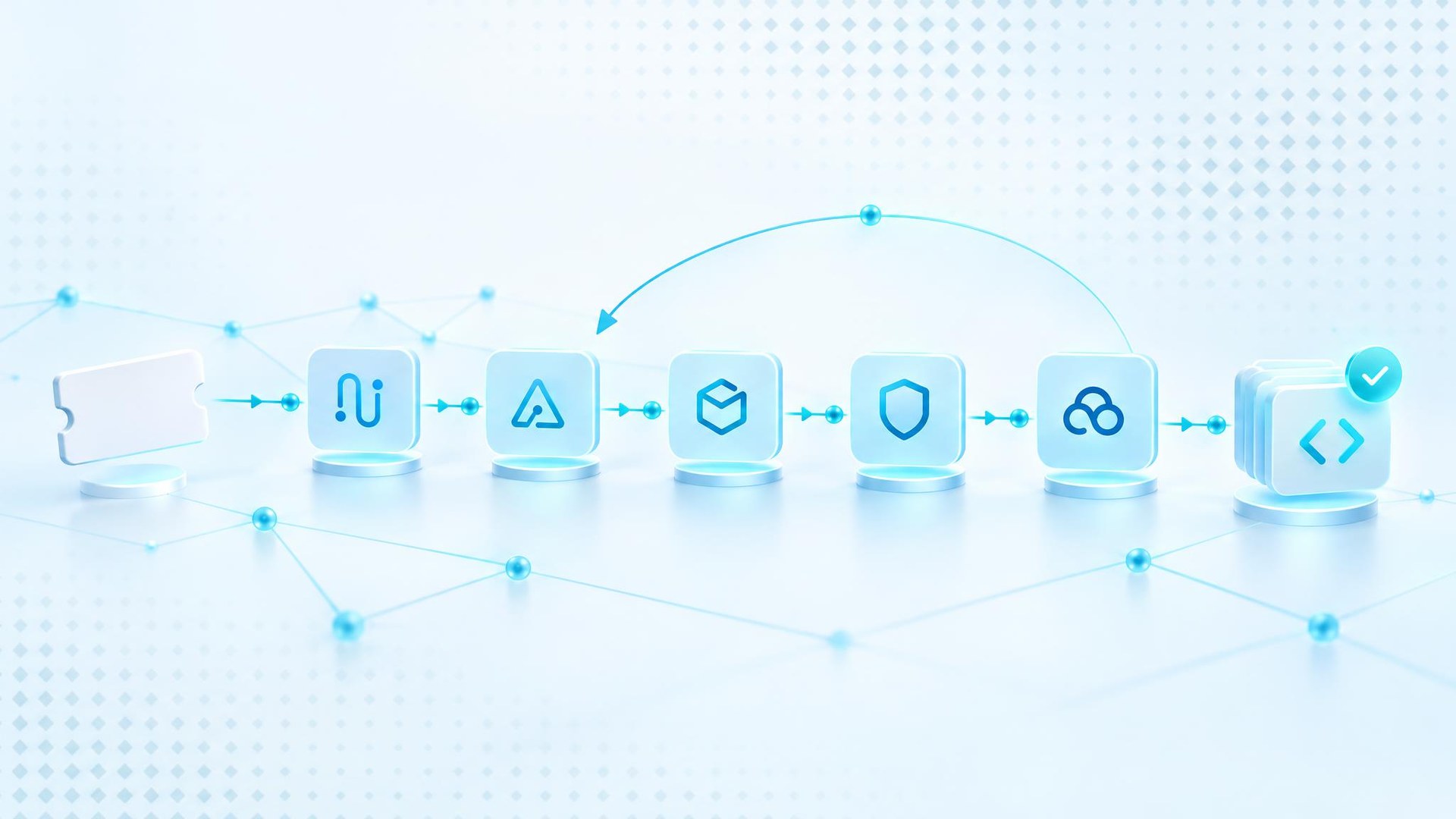
Harness has acquired select assets from Augment Code, including the Cosmos software factory, the Auggie CLI, the Code Context Engine, and related technology, with the team behind those products joining Harness, co-founder and CEO Jyoti Bansal announced in a Harness blog post on October 8, 2026. Cosmos becomes the Harness Cosmos Software Factory Agent and is available now.
The Asset Sale and Executive Statements
The agreement transfers select Augment Code assets, specifically the Cosmos software factory, the Auggie CLI, the Code Context Engine, and related technology, to Harness, and the employees who built those products are moving with them. According to the company’s press release, the team is joining to accelerate Harness’s work to make the entire software development lifecycle increasingly autonomous. Bansal wrote that Harness is investing in the products, the technology, and the people who built them.
In the press release, Bansal said AI’s impact on software will be measured by how much valuable software reaches customers, not how much code it generates. He positioned the acquisition as bringing code context together with delivery and production context so agents can make better changes from the start. Igor Ostrovsky, Augment Code’s co-founder and CTO, said the company set out to bring AI to the entire software development lifecycle, starting with context-aware coding, and described joining Harness as the next step toward that vision.
Augment Code gave its own account in a post by CEO Matt McClernan published the same day. McClernan wrote that the company agreed to sell the select assets because, in his characterization, Harness’s integrated platform delivers these capabilities to customers more effectively than building them independently. He said the move expands the reach of Augment’s developer-focused coding capabilities and continues its “original mission: improving software development at scale using AI.” His post described the company’s founding premise: enterprise development teams needed a different approach to AI-assisted coding because traditional tools treated code generation as a standalone task, while the harder problem was orchestrating AI-written code across complex systems at scale, which the company calls software factories.
How the Cosmos Software Factory Works
Cosmos takes a defined role in the Harness platform: automating engineering work from idea to code, after which Harness’s existing agents carry the code into production and operations. Bansal wrote that the workflow’s objective is a change ready for the team’s merge decision.
Work in Harness Cosmos starts from events rather than only manual prompts. A ticket assigned, a bug reported, a requirement written, a pull request opened, an alert firing, a webhook landing, or a schedule can each initiate work. A fleet of Cosmos agents then plans the change, writes the code and tests, and opens a pull request, and when a reviewer comments or a check fails, an agent fixes the issue on the same pull request, following the work through failed checks and merge conflicts.
Each agent works in its own isolated virtual machine and brings in an engineer at judgment checkpoints, such as approving a design or making the final merge. Teams can start from prebuilt agents called Experts, tune each one to their own codebase, and deploy it organization-wide. The press release names Project Builder, PR Author, Deep Reviewer, and PR Fixer as prebuilt Experts, while Bansal’s post lists PR Author, Deep Reviewer, Risk Analyzer, and Verifier as examples teams can adapt.
Supporting infrastructure includes the Code Context Engine, which keeps a live map of the codebase so changes fit the code already there; model routing that matches each task to a model; built-in integrations with GitHub, Jira, and Slack; shared memory that carries lessons from each review into the next change; and versioning and budget controls for running autonomous coding across an engineering organization. The factory’s stated output is a reviewed, merge-ready pull request that Harness agents then test, secure, and deploy.
Code Context, Delivery Context, and Governance
Harness plans to connect the Code Context Engine, which maps a codebase and the relationships relevant to a task, with its Software Delivery Knowledge Graph, which connects context about how software is built, tested, secured, deployed, and operated. Bansal’s post describes two intended benefits from joining the two: delivery and production context such as testing expectations, security requirements, deployment constraints, and past incidents and their remediations can inform engineering work before a change is written, and findings from review, quality testing, security testing, and deployment verification can return to the engineering workflow with the evidence needed to investigate, correct, and revalidate a change.
The post illustrates the loop with a vulnerability in a deployed service. Connected context identifies the affected code, the deployed version, relevant dependencies, and the checks a correction must pass. Harness Cosmos prepares a proposed fix, review, quality testing, and security testing provide feedback, and after the required checks and approvals the Software Delivery Agent takes the change through deployment and verification. If a test or deployment check reveals a regression, the evidence returns to the engineering workflow so the change can be corrected and checked again, and a rollout can be held or rolled back under the team’s delivery policies. The press release states the agents can loop until resolution.
Cosmos joins the Harness platform’s existing agents. The Software Delivery Agent builds and deploys software, manages infrastructure and database changes, and verifies deployments, with rollback where configured. The Security Testing Agent identifies, prioritizes, and addresses risks across code, dependencies, and the software supply chain. The Runtime Protection Agent works to understand security posture and defend applications, APIs, and AI in production against runtime threats. The Cost Management Agent controls and optimizes cloud and AI costs, connecting spending visibility and optimization with engineering-efficiency insights.
Harness Cosmos workflows will connect with the platform’s existing policy-as-code, access controls, approvals, and audit trails. Bansal wrote that the level of autonomy should reflect risk, contrasting a documentation-only update with a change to payment processing, and that routine, low-risk work can proceed within approved policies while higher-risk changes require additional validation or human judgment. “Autonomy should reduce repetitive work, not accountability,” he wrote.
Customers can adopt Harness Cosmos, continue using their preferred coding tools, or use both, according to the announcement. Harness Cosmos is available now, and Bansal’s post directs teams to start with an engineering workflow they want to automate, from implementing a ticket to preparing a pull request.
