

Add preferred source
Silicon Valley’s AI industry is grappling with an unprecedented compute shortage that is fundamentally reshaping the competitive landscape. After Anthropic CEO Dario Amodei’s plea to Meta for additional compute was rejected, he pivoted to a deal with SpaceX worth up to $45 billion. SpaceX acquired xAI in an all-stock transaction in February, and its quarterly AI revenue—spanning the Grok model, X platform advertising, and compute leasing—reached $2.561 billion, up 247% year-over-year, though the segment still posted an operating loss of $1.257 billion. Google spent $2.7 billion to bring back star scientist Noam Shazeer, only to see him defect to OpenAI over insufficient compute, intensifying internal resource-allocation tensions. H100 rental prices have surged nearly 40% in six months, with cloud providers demanding multi-year contracts and hefty upfront payments, leaving small startups in a bind. The shortage has spawned new businesses in GPU subleasing and a global compute gold rush, with venture capital firms now stockpiling compute themselves. Compute is becoming the entry barrier of the AI era, reinforcing the advantages of giants with self-built infrastructure—by comparison, Japan’s nationally planned domestic AI data center capacity is just one-tenth of what SpaceX alone already has online.
Key Elements
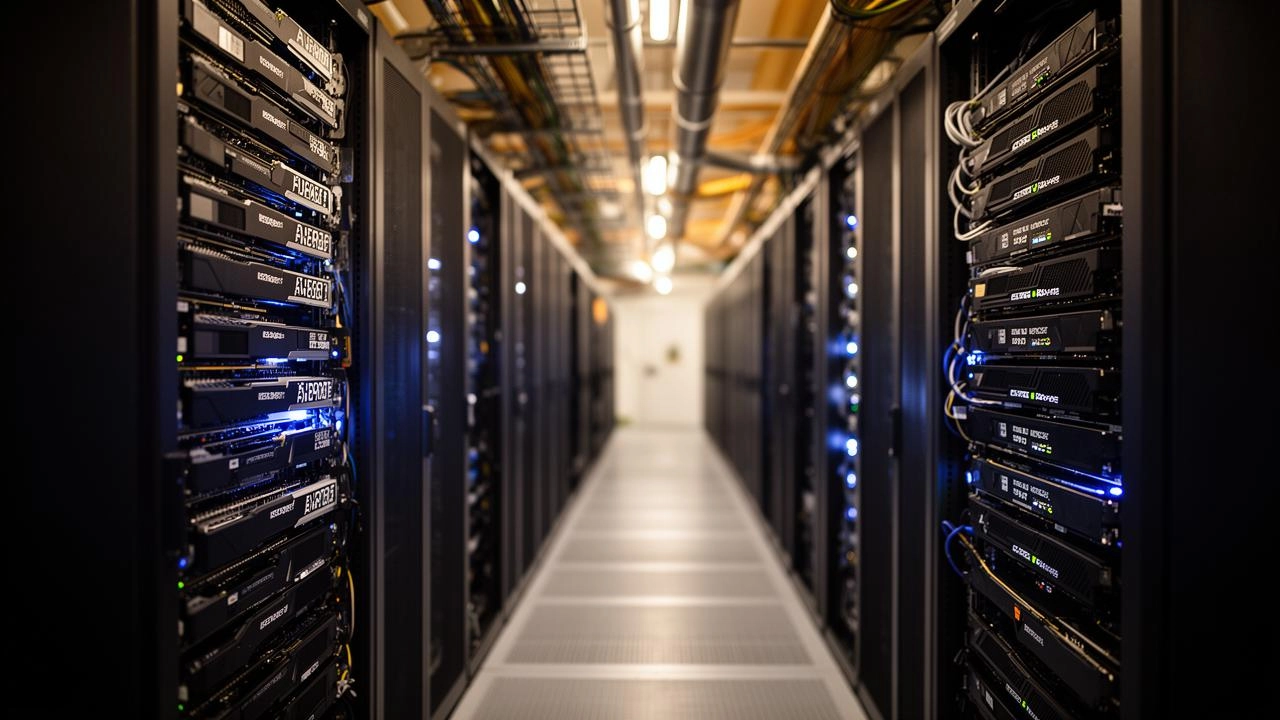
Silicon Valley’s AI competition is entering an unprecedented phase: compute, rather than talent or capital, is becoming the core variable determining corporate fate. From SpaceX transforming into a “middleman” for Nvidia GPUs, to Google spending $2.7 billion to bring back a top scientist only to lose him to OpenAI over insufficient compute, to Anthropic’s CEO humbling himself before rival Meta only to be rebuffed—a grand realignment around computing resources is unfolding across Silicon Valley.
Market reports indicate that Anthropic CEO Dario Amodei personally reached out to Meta’s Chief AI Officer Alexandr Wang earlier this year in an attempt to secure more compute, but Meta declined the request after an internal review. Amodei’s compute anxiety, however, found partial relief from Elon Musk.
In May, Anthropic and SpaceX reached a cooperation
In May, Anthropic and SpaceX reached a cooperation agreement under which SpaceX would deliver more than 300 megawatts of new compute capacity to Anthropic that month, involving roughly 220,000 Nvidia GPUs, while also increasing usage quotas for Claude Code and API access. According to sources familiar with the matter, the contract value over the coming years could reach up to $45 billion, sending shockwaves through the industry. Reuters subsequently reported, citing SpaceX’s IPO prospectus, that if subsequent expansions are included, Anthropic’s spending cap on leasing SpaceX compute could reach $84.5 billion by 2029; most of these agreements can be terminated with 90 days’ notice.
Notably, SpaceX’s “AI business” in its financials extends far beyond compute leasing. The rocket company acquired Musk’s AI firm xAI in an all-stock transaction on February 2, valuing the combined entity at $1.25 trillion, bringing the Grok large language model, X platform, and data center compute onto the public company’s books. In other words, the $2.561 billion in quarterly AI revenue is jointly contributed by models, advertising, and compute leasing—and Anthropic’s contract was only signed in May, with May and June still in a discounted ramp-up period.
SpaceX’s AI business has thus achieved explosive growth. The company’s first post-IPO earnings report, released on August 5, showed quarterly AI revenue of $2.561 billion, up 247% year-over-year and 213% quarter-over-quarter. Musk had previously criticized Anthropic publicly, but after the partnership was announced, he posted on X that he was impressed by members of Anthropic’s senior team.
Key figures from the earnings report:
| Item | Q2 2026 | Change |
|---|---|---|
| AI segment revenue | $2.561 billion | +247% YoY, +213% QoQ |
| AI segment operating loss | $1.257 billion | Adjusted EBITDA turned positive for the first time at $1.146 billion |
| Total revenue | $7.814 billion | +92% YoY |
| Net loss | $541 million | Prior-year period: $1.008 billion |
| Quarterly capex | $18.369 billion | $15.828 billion directed to AI compute |
| New cloud service contracts | $14.1 billion | Additional $6.7 billion signed in first weeks of Q3 |
The expansion trajectory of compute capacity itself is even steeper than the revenue curve:
Google’s Compute Dilemma and Talent Drain
The impact of the compute shortage is perhaps most starkly illustrated at Google.
Noam Shazeer is one of the eight core
Noam Shazeer is one of the eight core authors of the Transformer architecture and among the most respected researchers in AI. In 2021, he left Google to found Character.AI; in 2024, Google spent $2.7 billion through a complex transaction to bring him back, appointing him co-lead of Gemini. By all accounts, a scientist of this caliber should command top-tier re
Yet according to recent media reports, Shazeer’s team also faced the difficult reality of having compute reallocated. With limited GPU recient computing support. Ultimately, Shazeer defected to OpenAI in June, taking on the role of head of architecture research
Tensions within Google over compute allocation have long been an open secret. Sources familiar with the matter say that at Google’s Mountain View offices, researchers have clashed fiercely over which projects should receive priority access to scarce computing resources. Co-founder Sergey Brin has at times bypassed formal compute allocation procedures, directly intervening to redirect resources to projects he deems important. DeepMind co-founder Demis Hassabis had also long expressed frustration over insufficient compute for his projects, which reportedly factored into his decision to step down as DeepMind CEO.
Soaring Compute Costs and the Startup Squeeze
The most direct manifestation of the compute shortage
The most direct manifestation of the compute shortage is price. According to data and consulting firm SemiAnalysis, the hourly cost of renting Nvidia H100 chips on one-year contracts rose from a low of $1.70 per GPU per hour in October 2025 to $2.35 in March 2026—an increase of nearly 40%. Another measure shows hourly rental rates for Nvidia chips are up 60% from a year earlier.
Alphabet in July raised its full-year capital expenditure guidance to $195 billion–$205 billion, with the vast majority directed to AI infrastructure. Second-quarter capex alone reached $44.9 billion, double the year-ago period. Even so, the compute gap remains enormous.
For small AI startups, the situation is even more dire. In the early days of the AI boom, both large and small companies could flexibly rent AI chip clusters from cloud providers like Amazon Web Services (AWS) on a pay-as-you-go basis without multi-year commitments. But as leading AI labs have locked up compute resources en masse, cloud providers have changed the rules: requiring multi-year contracts, demanding upfront payments sometimes as high as 30% of contract value, and in some cases requiring startups to secure guarantors who would assume the contract if the company cannot pay.
Open-data center completion was delayed
Open-data center completion was delayed. Nick Frosst, co-founder of Canadian AI startup Cohere, said genuinely available reects ultimately cancelled or delivered at smaller scale than promised
The core dilemma facing startups: buy too much compute and cash burn becomes a sinkhole if user growth disappoints; buy too little and miss growth opportunities for lack of processing capacity.
A New Business: The Global Compute Gold Rush
The compute shortage has spawned a new business. San Francisco-based compute provider SF Compute evaluates data centers and leases their capacity to AI companies, with clients ranging from giants like Nvidia to small startups like Standard Intelligence. CTO Eric Park has traveled across remote parts of America, Manila, and Taipei in search of available compute, even finding servers in a facility converted from a chicken coop.
SF Compute CEO Evan Conrad said: There’s
SF Compute CEO Evan Conrad said: “There’s a massive gold rush happening right now, and it’s not easy to fully grasp the scale of this race.”
Silicon Valley’s top venture capital firms are also getting into the game of stockpiling GPUs themselves. Y Combinator in July launched a dedicated GPU cluster for its portfolio companies. According toodel training run but couldn’t find a suitable rental contract—directly prompting YC to build its own compute pool
Radical Ventures, an AI-focused investment firm, has gone further. Partner David Katz leads a team that tracks GPU supply, pricing, and contract terms, helping portfolio companies connect with compute providers. Over the past five years, Katz has negotiated compute deals worth billions of dollars. “The question used to be, ‘Where do I find capital?’ Now it’s, ‘Who can help me secure compute?’ These companies aren’t short on funding—but the expertise to actually build these facilities is remarkably scarce,” he said.
The Making of Compute Hegemony
The roots of the compute shortage are manifold
The roots of the compute shortage are manifold. OpenAI, Meta, and Google are all aggressively building new data centers, promising massive GPU reannot wait for those promises to materialize. This time gap forces companies to keep scouring the market for immediately available compute
Shifts in how users consume AI are also intensifying supply pressure. Starting this year, AI agents have replaced simple question-and-answer as the dominant usage paradigm, with long-running continuous tasks forcing servers to handle far more parallel computing demand.
The deeper structural shift is this: compute is becoming the entry barrier of the AI era. The narrative of startups challenging industry giants is fading; even with superior technical approaches, insufficient compute makes progress nearly impossible. The advantages of large companies with self-built infrastructure are being further reinforced.
AI assistant startup Instinct AI raised $1 billion
AI assistant startup Instinct AI raised $1 billion last month at a $10 billion valuation, yet may still struggle to compete against Meta and OpenAI with their far greater capital and compute repacity upfront sufficient to support a hypothetical 100 million users
The scale of this race becomes clearer when measured against plans on the other side of the Pacific. Noetra, a Japanese domestic AI consortium funded by 44 companies including SoftBank, Sony, NEC, and Honda, plans to deploy more than 27,500 Nvidia next-generation Rubin GPUs and build a 140-megawatt data center, with the Japanese government committing up to 1 trillion yen to this national project. By comparison, SpaceX alone had 1.4 gigawatts of compute capacity online as of end-June—ten times the planned capacity of this Japanese “national team” data center. Japanese companies are not idle—SoftBank’s GPU cloud service began commercial operations this month, and Sakura Internet put approximately 1,100 Blackwell GPUs into operation at its Ishikari data center in Hokkaido in February—but measured against Silicon Valley on the same scale, the gap is one of orders of magnitude, not merely progress.
Competition at the product level and cooperation at the infrastructure level are running in parallel across Silicon Valley. Former bitter rivals are now forced to the negotiating table over compute. As industry observers put it: no matter how vicious the online feuds, everyone eventually has to bow for gigawatts. The compute economy is reshaping Silicon Valley’s power structure.
