

With diesel fuel prices reaching all-time highs and more manufacturers looking for alternative fuel options, one source that isn’t mentioned too often is compressed natural gas. But just because it’s not discussed over dinner tables as much as, say, manufacturers going all-EV doesn’t mean it’s any less practical. In fact, compressed natural gas, or CNG, was used as a vehicle fuel for decades at this point, except we weren’t in a global fuel crisis and looking for alternative ways to power our cars. But as far as those alternatives go, CNG is a good shout, because any diesel could theoretically be converted to run on it.
In principle, converting a diesel to run CNG requires you to modify its ignition and compression to accommodate for the different fuel type, then fit a tank and hoses to actually carry that heavily-compressed fuel. The former is important because of a diesel engine’s lack of spark plugs — it relies instead on glow plugs and compresses the fuel enough to ignite it from the extreme pressures. That’s also why diesel engines are inherently more efficient than gasoline engines.
Regardless, you’ll need a plethora of parts to actually make this happen, ranging from pistons to valvetrain equipment, ignition systems and fuel lines. It’s invasive and time-consuming, but then again, so is buying a whole new truck. So when you’re a fleet owner looking to change to CNG, it’s a lot more cost-efficient to simply convert the engines rather than replace the whole fleet. But how is it done, exactly?
The process explained
First thing’s first: You have two ways of going about this. You can make it run partially on CNG, or make it run entirely on CNG. The latter is the more involved of the two, requiring a complete teardown and rebuild of the engine to accomplish.
CNG has different properties than diesel under compression, requiring less compressive force to produce power. However, a pure CNG conversion also requires spark plugs, so you begin with new pistons with different heads, designed to alter the compression ratio. Then you need to modify the engine head to accept spark plugs. All of this is topped with specialized valves designed to handle the hotter temperatures it runs at.
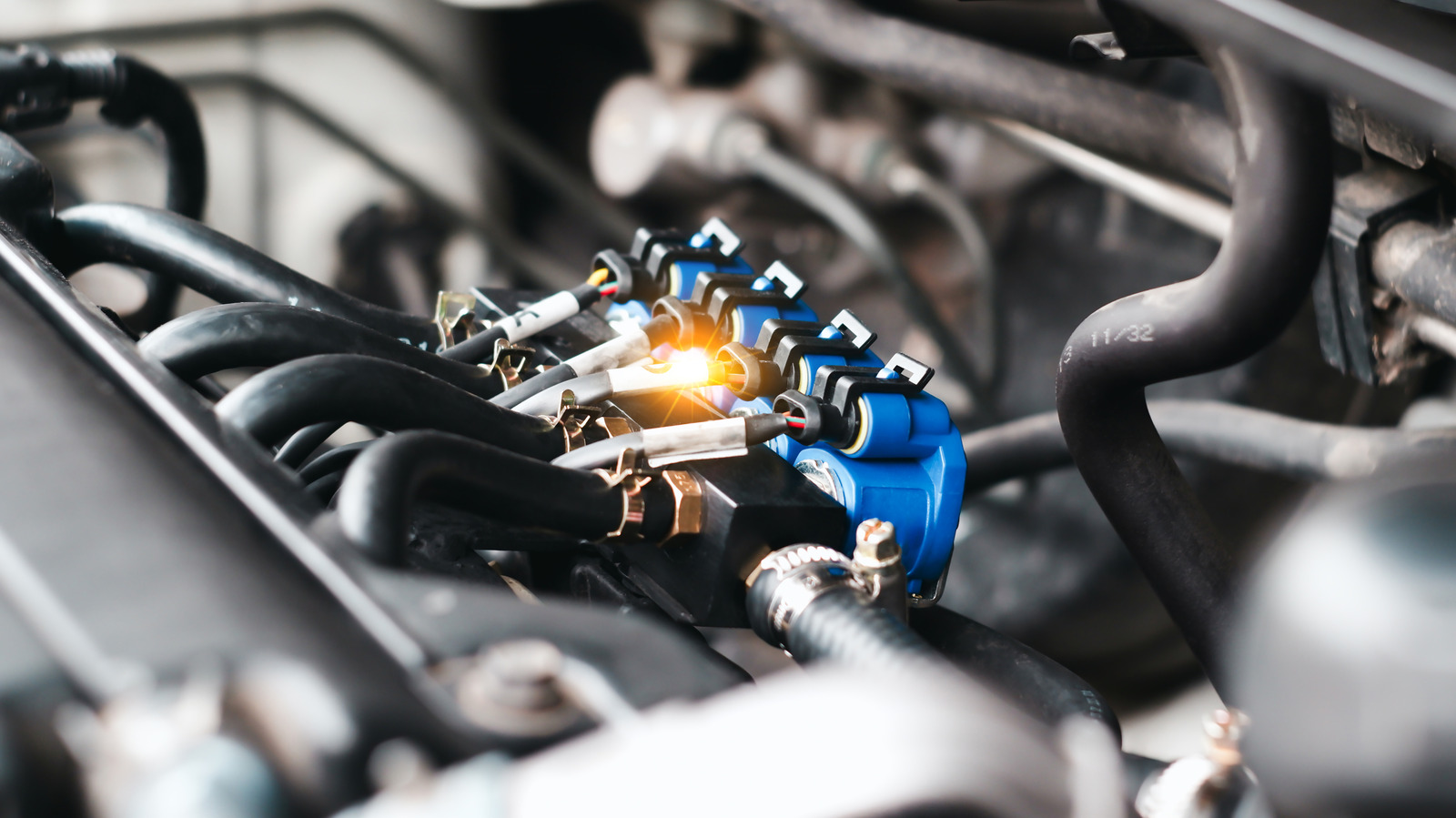
The next major factor to consider is fuel storage. CNG sits at around 3,000 to 3,600 psi at room temperature, meaning you need an exceptionally strong tank to contain the fuel, as well as pressurized hoses and injectors. Lastly, all of this must coalesce in an engine with a fully-remapped or brand-new ECU, since the factory map won’t work. This must all play ball with a new throttle body, ignition system, and gas mixer; the factory parts also wouldn’t handle the pressures involved. It’s as labor-intensive as any other engine overhaul in principle, though with the added steps of revamping the fuel system, tank, and computer thrown in the mix.
Again, theoretically any diesel could be converted this way, though most customers are commercial fleet owners and similarly-equipped businesses operating pickups and such. However, as the technology develops, who knows what other systems may crop up for regular consumer use, like Ford’s new CNG Super Duty.
The advantages and disadvantages of CNG conversions
As with any fleet or owner/operator, the main driving force here is money. Back in the late-2000s, there was little incentive to do this sort of work because diesel was orders of magnitude cheaper. But as fuel prices continue to skyrocket, it’s likely that such systems will reach their adolescence in the near-future alongside other innovations, like Hyundai’s patent addressing charging EV batteries at speed.
That said, there are inherent benefits and drawbacks to CNG systems, money notwithstanding. CNG operates at higher compression ratios, meaning it burns more completely than diesel. Thus, all things being equal, a CNG car produces less pollutants than a diesel. A CNG engine is also known to be extremely durable, another benefit for fleet owners — any truck that’s in the shop isn’t making money, after all. Moreover, less emissions also carries a nice tax bonus where applicable. Finally, natural gas, while also a fossil fuel, isn’t nearly as exploited as petroleum, and therefore is more widely available and cheaper.
There are several downsides preventing widespread adoption, however. Firstly, while CNG is clean-burning, it’s not actually as high-performance as diesel, which is particularly rough if you’re a long-hauler or pull heavy loads frequently. Then there’s the initial cost — expected from something with sparse infrastructure. And lastly, perhaps most importantly for consumers — where on Earth are you putting that giant fuel tank? It’s this huge, round drum, like those propane canisters. That’s a safety concern and just takes up all the space. But for fleet truckers, that’s far less of a problem.
