

Adobe’s Max conference brought a hefty dose of research, Creative Cloud app updates and a look at the creative process in the AI era. The company dropped a ton of Firefly agentic AI updates as well as photo, design and video news during the keynote on Tuesday. This event always gives us a peek at how the undisputed creative software industry leader is thinking about the future (again: AI).
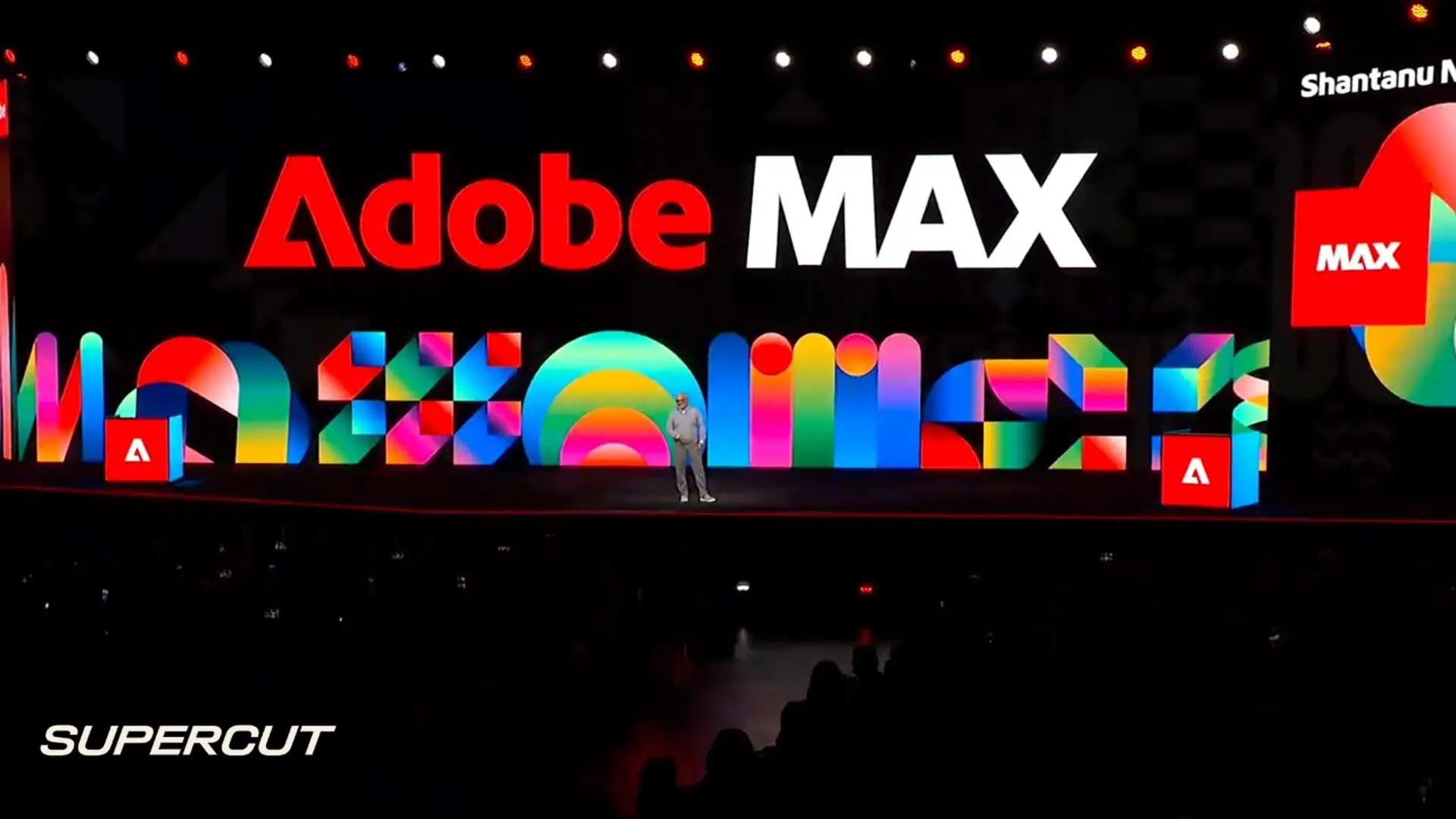
This year may be a sentimental one for Adobe CEO Shantanu Narayen, as it’s his last in the top job. Narayen announced this spring that he will be stepping down after 18 years as CEO, with customer experience chief Anil Chakravarthy slated to take over on Dec. 1.
Adobe’s flagship programs, like Photoshop, have undergone major AI makeovers, including recent developments like AI audio and soundtrack generation. This has been to the dismay of some of its creative customers who are wary of generative AI. And there are other tensions brewing, including Adobe’s $75 million settlement with the US Justice Department over subscription cancellations and new vibe-coded and free Adobe alternatives.
CNET was on the ground in Miami Beach,
CNET was on the ground in Miami Beach, Florida, to bring you all the latest news. Keep reading for all the biggest headlines from Adobe Max 2026.
Adobe Max 2026 is wrapping up on Thursday, and it has been a long week with a lot of news. (That’s not even including Jensen Huang’s resignation from Nvidia’s top role, though I can confirm it was much discussed in the Adobe Creative Park on Thursday.)
The throughline was undeniably AI, though Adobe’s latest product updates and research demos aim to showcase how creators can get more control over AI outputs. Here are the biggest headlines that you might’ve missed this week:
- Adobe Is Giving Its AI Agents Even More to Do
- The New Adobe Firefly AI Is All About Video Editing
- Adobe’s Cutting-Edge AI Research Projects Are All About Precision Editing
You can keep scrolling for more Adobe Max
You can keep scrolling for more Adobe Max 2026 moments. And rest assured, we’ll continue to cover all the Adobe news as it happens.

You can literally go hands-on with objects in your projects with this new intelligent user interface. A mix of AI models analyzes the image and brings up quick controls for each object’s material, shape, or texture. From there, you can easily resize and move things around until you get it right.

You can step into the world of any image with this new tool. It takes the image you upload and transforms it into a full 3D environment aligned with the original image’s design and aesthetics. It’s kind of similar to Apple’s spatial reframing.

This is a virtual filming environment where you
This is a virtual filming environment where you can adjust the camera position and characters while a scene is being filmed. You can create up to four variations (or takes, in filming lingo) and play them simultaneously. The idea is to try out multiple ideas without having to wait to individually generate different video clips.
This new tool lets you describe the kind of sound you want for an audio clip, and it creates what’s called a sound canvas. This matrix breaks down the elements of your prompt, helping you choose the best combination.
A prompt of a witch’s brew, for example, might offer a soundscape of bubbling liquid, crackling embers, the scrape of a spoon, and eerie undertones. You can pick the exact right balance of each element and add it to your final video.

This AI tool lets you paint onto uneven
This AI tool lets you paint onto uneven surfaces, like walls, fabric and skin. The tech recognizes the geometry of a scene and adapts to it, creating a better blend of objects in a composite image.
This program provides more editing tools for AI-generated video. With a new editing panel, you can cue specific motions or sounds throughout the duration of a clip. The idea is to give you more control over the final results of an AI clip, rather than just relying on whatever the model comes up with.

This tool makes it easier to apply edits to photos in batches. You can literally copy and paste a set of edits in Photoshop – and because the edits are non-destructively applied, you can tweak them as needed. The obvious appeal of this project is saving time on monotonous, routine photo edits.

This video editing demo shows how to consistently
This video editing demo shows how to consistently apply edits to a character across multiple video clips. You can write the AI prompt for the edit you want, and Scene Sweep will batch and apply them to your whole timeline, saving you time on manual edits or money on reshoots.

This vector-based project aims to understand a user’s creative intent, making it easier to edit designs. The new tool automatically adapts to a scene’s perspective, size and scale, and creates an entirely vectorized design. For example, if you place a car vector in a parking spot, Project Link Up will automatically resize it and “park” it there.

Project Screen Test puts you in the director’s chair and brings your digital characters to life. The platform creates custom personality profiles for the characters, allowing you to fine-tune their expressions, mannerisms, and actions across AI-generated video.
Sneaks is my favorite part of Adobe Max
Sneaks is my favorite part of Adobe Max. Adobe employees are some of the most creative people I’ve met, and every year they come up with new research projects that aim to solve some of the biggest headaches creators face. During Sneaks, these researchers take to the stage to show off these projects — full of the most cutting-edge tech Adobe is currently working on.
In the past, we’ve seen all kinds of projects like the eccentric digital dress whose fabric could change patterns and last year’s photo editing tools that made me question what I saw and more. There’s no guarantee that these projects will ever get released, but it’s a great look at where Adobe is investing in its future. And this year’s celebrity host is none other than Terry Crews, from America’s Got Talent and my beloved Brooklyn 99.
Sneaks kicks off at 5:30 p.m. ET / 2:30 p.m. PT on Wednesday, Nov. 11. You can watch remotely with this YouTube livestream.

Christian Dior’s creative director Jonathan Anderson says
Christian Dior’s creative director Jonathan Anderson says that his job would be “impossible” without technology. He talked about using photo software to help visualize different ideas — try out variations without having to physically create them — and help reduce waste.
Anderson also helped with the costuming for Luca Guadagnino’s upcoming film Artificial, about OpenAI CEO Sam Altman. Anderson joked that he had no idea what artificial general intelligence was even after reading the script.
And yes, he’s seen those AI deepfakes of Taylor Swift in her wedding dress, but as the designer of the dress, he confirmed those aren’t it. Deepfakes are one of many reasons, along with job loss, that people are understandably worried about new technologies, he said.
We’re human, that’s the part we have
“We’re human, that’s the part we have to remember,” Anderson said. “Creativity can work with technology and always has … we as a society have to work out what we want from it.”

Katelyn Chedraoui/CNET
Creator and viral filmmaker Drex Lee shows off how he uses Firefly Boards, Adobe’s AI infinite canvas for moodboarding, to help plan his shoots.

Celso Gomes/Adobe
Tonight at the Sneaks session, Adobe researchers will demo a variety of new, cutting-edge research projects — and CNET got an early look at three of them.
Each of the projects I saw used AI
Each of the projects I saw used AI to enable more precise editing of photos and videos — something creators want and that AI tends to lack. In Project Hands On, for example, an intelligent user interface lets you literally get your hands on objects in a scene to tweak them until they’re exactly right. For video editing, Project Scene Sweep used AI models to tag and track characters across video clips and apply edits to them with text prompting.
There’s no guarantee any of the Sneaks projects will be released to the public, though two of these, Deep Brush and Hands-On, are getting an initial public release this week on the relaunched Adobe Labs website. The Adobe Labs playground space will grant early access to select research previews going forward.
According to Gautham Mysore, senior principal scientist overseeing video and audio research, the goal is finding new ways to blend science and art. “Building out new technical methodology, the science and the art together,” Mysore said. “That’s the path we’re gonna go.”

Katelyn Chedraoui/CNET
Day 2 of Adobe Max kicks off
Day 2 of Adobe Max kicks off with the company’s “Inspiration” keynote. As the name implies, this session is less focused on technical product updates and more on sparking inspiration and celebrating the creative process.
Slated to speak this year are Christian Dior’s creative director Jonathan Anderson, co-founder of They Are Creative content studio Siobhán Maroney, filmmaker Drex Lee and writer/director Omar S. Kamara.
You can watch the inspiration keynote remotely using Adobe’s YouTube livestream. It starts at 10 a.m. ET (7 a.m. PT) on Wednesday, Nov. 11.
During Adobe Max on Tuesday, a multiyear AI
During Adobe Max on Tuesday, a multiyear AI partnership with Disney was unveiled that will give Disney early access to AI tools including Firefly, Firefly Foundry, Premiere and Photoshop, along with dedicated Adobe teams to help with engineering and research.
Disney will use Firefly Foundry to customize generative AI models that keep artists in the loop and are trained on Disney characters, styles and environments.
“The two companies will build a new creative foundation that thoughtfully deploys AI as an accelerant for artistic vision, creativity and guest engagement,” said Hannah Elsakr, Adobe vice president of GenAI New Business Ventures.
Disney and Adobe are going to explore emerging
Disney and Adobe are going to “explore emerging technologies, including responsibly developed AI, in support of Disney’s creative teams.” Disney hasn’t been shying away from AI of late, last week hosting an Accelerator Demo Day at Walt Disney Studios in Burbank, California, where it showcased products from six AI companies that are being tested or implemented within Disney theme parks and hotels, as well as in animation and filmmaking.
The companies also called out collaboration on marketing, events and customer engagement across Walt Disney World, Disneyland and Disney Cruise Line, as well as ESPN Edge, which is ESPN’s innovation hub, and Disney StudioLab, a tech innovation division at the entertainment giant.
Disney’s Imagineers were already using Adobe Firefly to help design rides, and Adobe said Tuesday that there are also combined projects already happening with StudioLab and ESPN Edge.

Katelyn Chedraoui/CNET
Anil Chakravarthy closed out the opening keynote after
Anil Chakravarthy closed out the opening keynote after 2.5 hours, but don’t go anywhere. Now comes the fun part, where I get my hands on the new tools, AI assistants and agents and actually put them to the test. Keep scrolling for all the AI news and updates coming to Photoshop, Premiere, Illustrator and more.

Katelyn Chedraoui/CNET
Firefly started with AI image and video work, and now, it’s moving into full-fledged design territory. A new design interface in Adobe Firefly brings together print, 3D and animation work into one place. It’s meant for designers who do a little bit of everything, said Paul Trani, principal director evangelist.
The intelligence assistant is a big part of the interface, where you can use text prompts to come up with variations of different scenes. It’s available today on the web.
To me, Firefly Design feels to me
To me, Firefly Design feels to me a little bit like Canva — a basic-to-intermediate toolkit that covers a lot of graphic design needs without the overwhelming endless options in programs like Illustrator or Photoshop. That’s likely part of the appeal of Firefly Design; you don’t have to spend eons learning how to use it.

Katelyn Chedraoui/CNET
Michael Fugoso, senior design evangelist, is probably the only person who could make complicated vector designs look fun. With a “space churro” design, Fugoso showed off the new updates in Adobe Illustrator.
Creative Cloud subscribers will now have access to the Adobe Fonts library in Illustrator. New improvements to tracing tech help refine designs, including bringing hand-drawn sketches to vector form and using the curvature tool in new ways. The AI assistant in Illustrator (new but not new from today) can also take your text prompts and edit your designs.
In a quality of life feature that got
And in a “quality of life” feature that got some of the loudest cheers so far, you can use the arrow keys on your keyboard to place objects in a neat grid without having to individually size and place them.

Photoshop, arguably Adobe’s most important app, is still meant for people who want “pixel perfect” projects, as Deepa Subramanium, vice president of Creative Cloud marketing, put it while introducing the new updates.
The new relight layer adds a new lightity. As seen in a live demo, you can even move the light
Generative restyle uses AI tech to apply different
Generative restyle uses AI tech to apply different aesthetics or styles to your project, and following Adobe’s theme of giving creators more hands-on control, these styles come with a slider for you to decide how strongly you want the style applied to the project.
Adobe’s Emmy-winning video editor Premiere is getting an upgrade to make it easier to edit your less-than-perfect video clips.
A new generative remove tool lets you select an object, and the AI will automatically track the object throughout the clip to remove. It’s a mask feature, so the only pixels affected are the ones you want to remove and replace — great for cutting down on AI hallucinations in the rest of the clip.
A new audio tool can tease apart different
A new audio tool can tease apart different voices, even when they’re overlapping, so that you can pull apart two different dialogue tracks. And a new color grading tool should help video editors light scenes how they want. (No boring, bland lighting, please.)

Without naming generative AI specifically, Adobe CEO Shantanu Narayen kicked off the keynote with a clear message: Creators should be protected from the harmful effects of new technologies.
AI might be the most controversial issue in creative software, and it’s gotten no less contentious in the years since Adobe first announced it was pursuing gen AI in 2022-2023. While most (if not all) tech keynotes are AI-loaded, it’s refreshing — and absolutely necessary — for Adobe’s chief executive to acknowledge that many of its over 1 billion weekly active users don’t want or need AI.
Narayen announced earlier this year that he’s stepping
Narayen announced earlier this year that he’s stepping down as CEO, with customer experience chief Anil Chakravarthy slated to take over on Dec. 1. Chakravarthy’s message was clear, too: We’ve heard that some creators don’t want AI, and we’re still building for you. That said, Adobe is diving even deeper into AI, for the folks who do want (or don’t mind) using the tech.

2026 has undoubtedly been the year of the AI agent, and Adobe is deepening the role its creative agents are playing across its apps.
Over the past year, Adobe has slowly been rolling out conversational AI assistants to its programs like Acrobat, Adobe Express and eventually Photoshop. Now, it’s taking its AI a step further and allowing agents from some third-party AI companies to connect to its apps
For the uninitiated, MCP, or Model Context Protocol,
For the uninitiated, MCP, or Model Context Protocol, is how AI systems can connect with external apps and databases. In this case, it’s allowing people using ChatGPT and other chatbots to have their agents make changes to Adobe apps — you can ask ChatGPT to edit a project in Photoshop, for example. These capabilities are in preview now (so not generally available yet), but it’s a clear sign of the future Adobe is chasing.
“These new models allow [users] to actually do things faster, experience the full power of the application and really make it more accessible to a broader set of users who are not experts in our workflow,” Shilpa Anand, vice president of global strategic partnerships, told me.
Check out more on Adobe’s agentic mission in our story here.

Adobe Firefly — the name of both its in-house AI models and its AI hub — is getting some major updates, including an upgraded video editor.
Like other creative AI companies, Adobe has been
Like other creative AI companies, Adobe has been building up its AI video capabilities over the past year, with video models made both in-house and by third-party AI companies. Now, the new interface incorporates the Firefly AI assistant, which is in beta, in a bigger way. There’s a dedicated ideation panel and more ways to storyboard ideas. You can clearly visualize variations of different clips for each scene.
That beginner-to-intermediate design is, well, by design — Adobe is aiming to lure in folks without decades of video-editing know-how with its generative AI features. It fits with Adobe’s larger goals; it wants to build Firefly for video and image editors the same way it built Photoshop — to be the “career partner” for creators.
Check out all the Firefly updates in our story here.
It’s 80 degrees here in Miami, and we’re ready for Adobe to kick off Max with its opening keynote.

Katelyn Chedraoui/CNET
I’ll be here all week, along with thousands
I’ll be here all week, along with thousands of creators from across the globe, covering all the Adobe news. Check back here often for breaking news, live demo clips and more.

Katelyn Chedraoui/CNET
Adobe has been the undisputed industry leader for creative software for decades. But new, AI-created apps have software experts wondering if there might be a true Photoshop clone out there, just an AI prompt away.
It started with a project called ArtCraft, a series of vibe-coded apps that mimic the core functionalities of popular services like Photoshop, Microsoft Word and more. It was made by a sole software engineer named Brandon Thomas, and the open-husiasts: Will AI vibe coding kill legacy software?
Professional creators, whose bread and butter is sunk
Professional creators, whose bread and butter is sunk in Adobe, aren’t likely to jump ship. But in the US’s current affordability crisis — and with legacy tech companies constantly raising their prices — a cheaper, AI-created alternative to Photoshop or Microsoft Word can be an attractive option for folks who are weary of paying for another subscription.
Adobe Max kicks off at 9 a.m. ET / 6 a.m. PT on Tuesday, Nov. 10. You can watch the livestream on YouTube. It’s expected to be about 2 hours long. The opening keynote is when we hear from Adobe execs and see all the product updates coming to Photoshop, Premiere, Illustrator, Firefly AI and more. CNET’s on the ground in Miami to bring you all the latest updates as they happen.
A lot has changed since last year’s Adobe Max, but some things stay the same. That is, Adobe is still all-in on artificial intelligence.
The biggest changes are the general release
The biggest changes are the general release of AI assistants in Photoshop, Adobe Express and its AI hub, Firefly, first teased at last year’s conference. These assistants are similar to chatbots, where you enter your request and the AI does the editing for you. Adobe also released AI music generation tools and new photo editing modes. For video editors, too, there are the new Premiere mobile apps.
Adobe tech is also now showing up in ChatGPT and Claude; Disney is using Firefly to help design theme park rides. And from what CNET has heard from Adobe execs, the company isn’t planning to slow down its AI research any time soon.
Other big Adobe news this year was the $75 million settlement Adobe and the US Department of Justice struck in March. The case was brought by federal prosecutors over claims that Adobe made its subscriptions intentionally difficult to cancel. Adobe denied any wrongdoing but agreed to pay $75 million to customers (in the form of free service) and another $75 million to the US government.
