

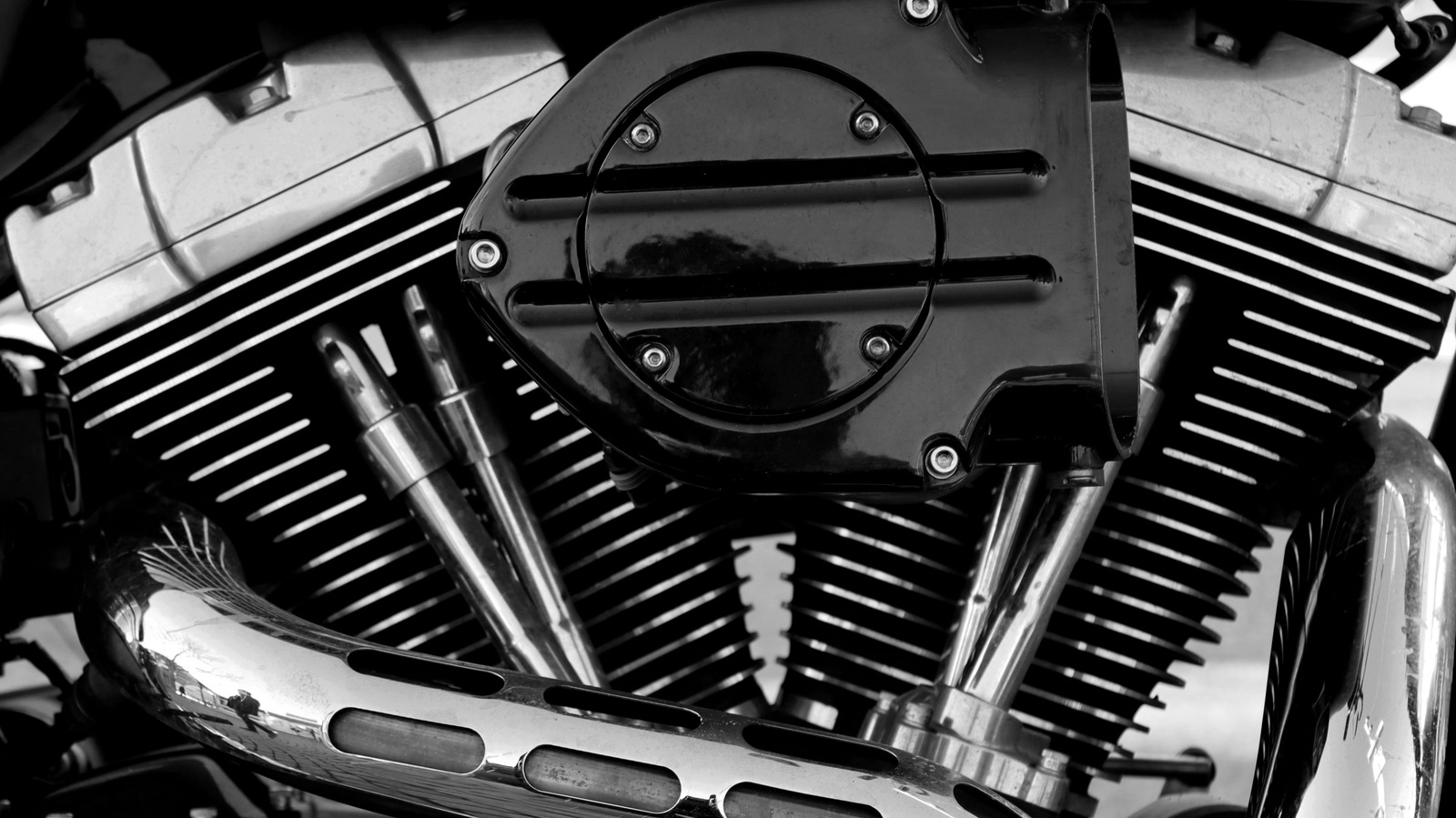
V-twins have been around for decades and remain one of the most popular motorcycle engine types on the market today. Parallel twins and inline-fours have come to dominate the vast majority of the modern standard and sport motorcycle market, but there are still a handful of adventure touring motorcycles that use V-twins, while most cruisers are powered by them. In fact, Harley-Davidson’s most powerful street-compliant motorcycle engine is the 135ci Screamin’ Eagle Stage IV V-twin Performance Crate Engine.
There are a lot of reasons to love this engine design. Many large-displacement cruiser V-twins are tuned for strong low-rpm torque, allowing heavy bikes to get up to speed quickly. V-twin cylinders with a front-to-back installation can provide a narrow front-end profile, which makes for a more slender layout between the rider’s knees. They’re also well known for the rugged character of their deep, rumbling sound. If these are the characteristics that you’re looking for in a motorcycle, then a V-twin could be a solid option.
That said, there is a reason why so many manufacturers have been steadily making the shift toward parallel twins when they want to make a two-cylinder bike. There are a handful of drawbacks to V-twins that you might want to consider before going to the local dealership and picking up your new ride. Here are five reasons to think twice before you sign the paperwork.
Excessive vibrations reduce rider comfort
One of the biggest disadvantages to consider when you’re looking to purchase a V-twin motorcycle is the sheer amount of vibration that some of these engines generate during operation. The low rumbling sound produced by V-twin engines, which is a trademark of their character, is influenced by the unique firing sequence of the cylinders.
Different V-twin engines have their cylinders set at various angles. Indian has made V-twins that are as narrow as 42 degrees, while Ducati is celebrated for developing the 90-degree L-Twin motorcycle engine cylinder layout. The one thing that defines the V-twin is that its two cylinders are arranged at an angle to one another, rather than configured side-by-side like a parallel-twin or directly opposite each other, such as boxer engines. Some V-twins have uneven firing intervals, meaning the time gaps between the engine’s power pulses are not always the same. This irregular firing cadence, coupled with moving pistons and connecting rods, generates shaking force and vibration within the frame of the motorcycle.
A bit of vibration isn’t that big of a deal if you’re looking to get a town bike or a short-distance commuter, but it can be a killer on the back and wrists over long journeys. Many modern manufacturers try to mitigate it by introducing counterbalancers or rubber engine mounts, but these aren’t without consequence either. Counterbalancing can actually rob the engine of usable horsepower, and both options add weight and complexity to its design.
Cylinder placement restricts cooling airflow
Another thing to consider is the physical shape of the V-twin and how it sits on the bike’s frame. Parallel twins, inline-threes, inline-fours, and most other engine types typically use a single, solid engine block that contains all of the cylinders in one hunk of metal. V-twin motorcycle engines are a little different, using two separate cylinder barrels attached to a crankcase, each of which is angled away from the other, creating that distinctive “V” shape. This setup offers some advantages, but it also raises a handful of engineering dilemmas.
There are a couple of different ways that V-twins can be mounted. Some have their cylinders sticking out to either side. This isn’t that big of an issue on narrow, small-displacement motorcycles where the cylinder blocks don’t need to jut out too far, but it can take up significant lateral space if they are large or set at a wide enough angle. This is a major part of the reason that you don’t see them often anymore.
The significantly more common orientation is to have their cylinders mounted aligned front-to-back inside the frame, though this method presents a couple of different problems. The first is that they can stretch the physical height and length of the bike, forcing longer wheelbases or taller seat heights. The second is airflow. On air-cooled V-twins, the front cylinder restricts airflow to the rear one, which can limit cooling. This is much less of an issue than it once was, now that the vast majority of modern motorcycles are liquid-cooled.
Weaker acceleration at higher rpm
Of course, one of the biggest factors that you’ll need to think about when choosing any engine is how it will affect the bike’s performance. We’ve already mentioned that V-twins are well known for having a lot of low-end grunt. This provides a good amount of torque when accelerating from a stop, making it easy to power big, heavy cruisers and touring motorcycles without them feeling overly sluggish. Such performance is great for town riding and simple commutes where you spend plenty of time at lights and stop signs, or climbing hills, but it’s less ideal for sustained highway travel.
One flip side of cruiser-oriented V-twin engines is that these motorcycles start to lose a lot of acceleration at higher rpm, especially when compared with bikes that use inline-four motors. This means that passing and merging can be a bit trickier at elevated speeds, as it may take more time and road space for the bike to reach the desired momentum.
The experience can be frustrating when you want to quickly zip around a slow-moving car, but it can also be dangerous if you aren’t careful, as you’ll spend more time in other vehicles’ blind spots. This power delivery dynamic is the polar opposite of inline-four motorcycle engines, which have a disadvantage with low-end torque but accelerate well at high rpm. Many V-twins seem to compensate for this weakness by simply offering higher displacements that brute-force extra high-speed acceleration.
Heavier engines reduce maneuverability
The weight of the engine is something that one always needs to consider as well. As a general rule, motorcycle engines of similar displacement ⏤ that is, the total volume swept by all their pistons during a single stroke ⏤ weigh more when they have additional cylinders, although the exact weight depends on their design. A larger number of smaller cylinders means extra moving parts and surrounding metal, which all adds up to increased weight. So inline-threes will typically weigh more than parallel twins of the same displacement, and inline-fours are heavier than inline-threes.
That said, V-twin motorcycles tend to be significantly heavier than parallel twins, even when the displacement is the exact same. The use of two separate cylinder blocks adds a considerable amount of weight to their design. In fact, V-twins often weigh nearly as much as inline-fours. For example, the Yamaha MT-07 is equipped with a 689cc parallel twin in its chassis and carries a 403-pound wet weight. Meanwhile, the Suzuki SV650 is powered by a smaller 645cc V-twin. It has a comparable body and tank size, but a 437-pound curb weight. Then take a look at the 432-pound Honda CBR1000RR, which uses a 1,000cc inline-four, and compare it to its elder sibling, the Honda RVT1000R, powered by a 999cc V-twin and weighing 489 pounds. That’s over 50 pounds more wet weight on a sports bike with half the cylinders made by the same manufacturer.
V-twins might have the extra low-end grunt to make up for the loss in acceleration. But additional weight in the frame means slower directional changes, heavy low-speed handling, and longer stopping distances.
Extra components increase maintenance costs
Another consequence of the V-twin design is that it drives up manufacturing costs. When you compare V-twins to parallel twins, it’s clear that the former is a much more complicated system. V-twins have two separate cylinder heads, dedicated camshaft assemblies, independent valve train components, and dual exhaust runs. The extra components and raw materials add to the overall cost of manufacturing, as does the added complexity of assembly. This, in turn, drives up the MSRP of the bike when it comes time to buy it at your local dealership.
Unfortunately, the added costs don’t end once you own the bike. Keeping it up and running is going to be pricier too. Basic maintenance tasks in the majority of front-to-back orientation V-twins, such as checking valve clearances or replacing spark plugs on the rear cylinder, often require the mechanic to remove other parts of the motorcycle to gain access due to the tight clearances required to make these engines fit inside the frame. These additional tasks ramp up labor costs, which often drive up the price of maintenance more than the parts themselves.
Also, having a large number of moving parts inside a complex machine means that there are additional components that can wear out or break. These might need to be replaced at some point in the bike’s life cycle, which adds further cost to owning a V-twin.
