

As kids and parents get their gear ready to go back to classes by buying supplies and materials, schools are also preparing by equipping classrooms—even if that means adding AI tools. Chris Glorioso reports.
On social media, education influencers promote AI as the latest “teacher hack.” With a slew of new products, powered by large language models (LLMs), educators can now create lesson plans or even evaluate a stack of student essays – with little more than a prompt and the click of the mouse.
But some parents and students fear teachers are starting to offload too many core responsibilities to the education tech companies that develop AI tools.
“There is a rupture in trust between teachers and students,” said Kelly Clancy, a mother of three New York City public school students who founded Parents for AI Caution in Educational Spaces, a group calling for a two-year moratorium on the use of AI platforms in city schools. “I think that this is entirely built on the idea that these companies want to make a lot of money. Their incentive is not on helping students learn.”
Watch NBC 4 free wherever you are
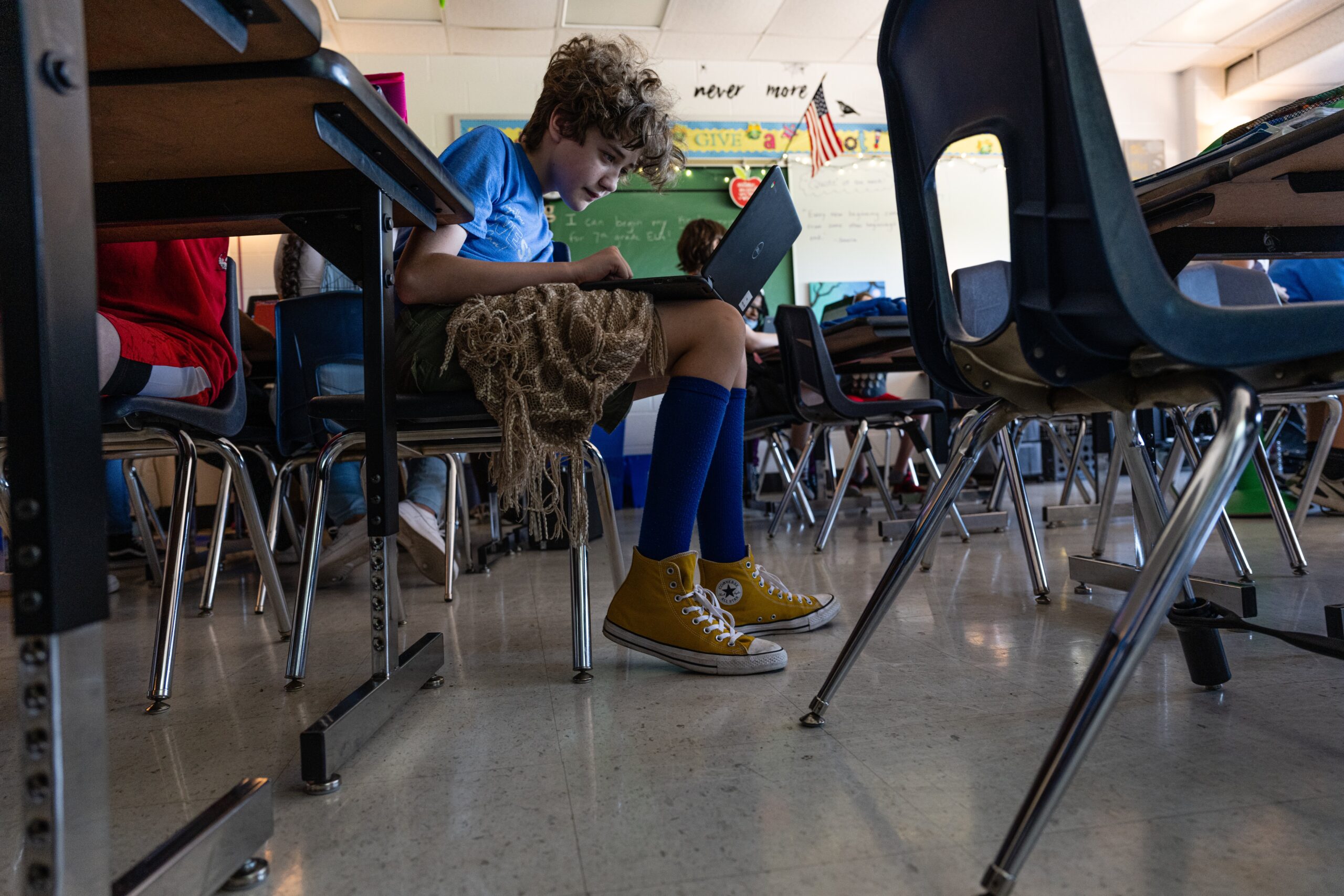
As more teens use AI in school, parents are grappling with how it impacts learning
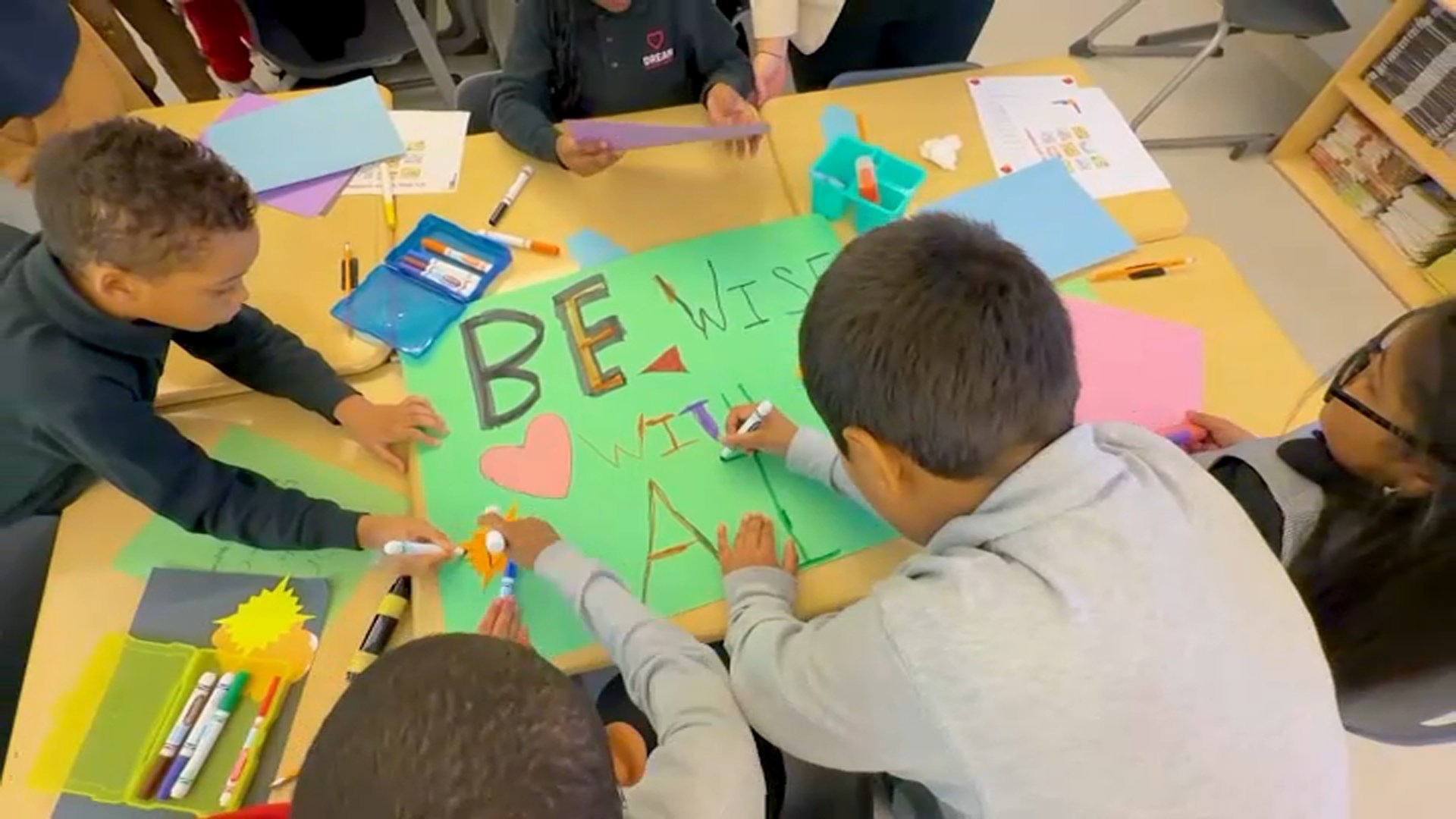
What happens when 3rd graders write their own policies for AI in schools
Flora Encarnacao, the Superintendent of Kearny Schools in New Jersey, says she takes concerns about AI seriously, but after convening a committee to study the pros and cons, she and her staff decided teachers should have access to three different platforms that use LLMs to generate things like worksheets, quizzes and even comments on report cards.
“It’s a tool,” Encarnacao said. “And it’s something that we recognize could benefit them and make them more effective at delivering instruction. But we understand that it doesn’t replace good teacher feedback and the relationship that they have with the student.”
Steven Way, Kearny’s Director of Digital Innovation and Evaluation, said part of the rationale for embracing AI is to prepare for students for the future economy.
“When our students graduate, no matter what career they choose, whatever path, AI is in all these careers now. So that’s also something we have to balance,” he said.
It is not entirely clear how widespread the use of AI is among teachers in the Tri-state. Last month, the I-Team filed public records requests with more than 100 of the region’s biggest school districts, asking for all contracts and agreements with AI platforms. So far, only a handful of districts have handed over records. Most have yet to respond or issued letters saying they need more time to process the requests.
According to poll of more than 2,200 educators published by the Walton Family Foundation and Gallup, 6 in 10 teachers reported using an AI tool at least occasionally in the 2024-25 school year. About a quarter of the teachers polled said they had used AI “to grade and/or provide feedback on assignments or assessments.”
Adeel Khan, the founder and CEO of Magic School AI, said his platform is used by teachers who serve one in five students throughout the entire US.
“It’s the fastest growing technology product for schools, ever,” said Khan, who was a former high school teacher and principal.
Among the tools offered by Magic School are a worksheet generator, a lesson plan generator and a “writing feedback tool” that offers “constructive and personalized feedback on student assignments” that is “specific and actionable.”
Khan said teachers could use the feedback tool to evaluate 150 student writing assignments all at once.
“The rubric-aligned feedback is higher quality than I could have given on my own to all 150 students. I could say that with my own eyes, and I was a good teacher,” Khan said.
Developers of AI teaching tools are careful to note that evaluations, assessments, or feedback produced by the technology should always be reviewed and validated by human educators. But some students have complained errors are slipping through.
Last year Liam Roselle, then a high school senior in Connecticut’s Amity School District, complained that an AI grading tool called “Class Companion” had been used to evaluate his AP psychology essay, resulting in points that were deducted incorrectly.
“The use of AI to grade my assignments is incredibly and horribly unethical and I have a person objection to it,” Roselle told the Amity School Board in January.
Class Companion did not respond to the I-Team’s request for comment about the incident.
Dr. Jennifer Byars, the Amity Schools Superintendent, said Roselle’s teacher adjusted the final grading decision after learning about the error. And she said the district also revised its policy to require student notification whenever AI is used to help evaluate student work.
“The grading policy now expressly states that AI may support grading and assessment practices but may not serve as the sole basis for evaluating student work or determining grades,” Byars wrote in an email to the NBC New York I-Team, adding, “final responsibility remains with the educator.”
While the use of AI to help grade or provide feedback on student work has drawn some of the harshest criticism, some experts have also warned using AI to instantly generate lesson plans carries risk as well.
Researchers at UMass Amherst recently analyzed more than 300 lesson plans generated by general purpose LLMs and found only about 10 percent of the educational material “promoted higher order thinking.” Chenyang Xu, one of the researchers who worked on the study, said the results suggest AI teaching tools may save time but don’t necessarily increase quality.
“Generating something faster doesn’t eliminate the work and time of making it good,” Xu said.
Vlad Gutkovich, the co-founder of Diffit, an AI tool that generates “formatted, classroom-ready materials,” said he’s not surprised the UMass study found general purpose LLMs produce low quality educational material. But he suggested that is why more specialized platforms, like his, are needed.
“General purpose AI has not been very good at making [educational] materials three years ago and that is still true today, “Gutkovich said. “That’s why we treat quality as an engineering discipline. That is all we focus on – is how do we get this incredibly powerful technology to do a good job for teachers and the students they serve.”
Somewhere between the AI believers and the AI skeptics is Lalitha Vasudevan, the Vice Dean for Digital Innovation at Teachers College Columbia University. She says education policy makers should find ways to experiment with AI and find good use cases – while guarding against over-reliance on the technology.
“If they’re just using AI summaries to AI-generate the report and then teachers are using AI to give feedback, you’re just stuck in what some people are calling the slop cycle,” Vasudevan said. “We don’t want that to be what happens in schools.”
