Close Menu
AIToday7

    Subscribe to Updates

    Get the latest creative news from FooBar about art, design and business.

    What's Hot

    Brief independent investigation of agents’ behavior, reasoning and collaboration in the OpenAI / Hugging Face hacking incident

    August 27, 2026

    Fake US thinktank set up and funded by Israel sought to game AI for propaganda

    August 27, 2026

    Medical Readiness Command, Europe G-6 Information Technology Team wins 2026 MEDCOM Mercury Award for HIT Team of the Year

    August 27, 2026
    Facebook X (Twitter) Instagram
    Trending
    • Brief independent investigation of agents’ behavior, reasoning and collaboration in the OpenAI / Hugging Face hacking incident
    • Fake US thinktank set up and funded by Israel sought to game AI for propaganda
    • Medical Readiness Command, Europe G-6 Information Technology Team wins 2026 MEDCOM Mercury Award for HIT Team of the Year
    • Corgi built its name insuring AI startups. Its new carrier targets dry cleaners, salons and more
    • 5 Of The Best UGREEN Gadgets You Can Buy In 2026
    • Three UK airports hit by cyber-attack with data of 8.7m customers accessed
    • How to advertise on ChatGPT: A step-by
    • The Data Center Backlash Is a Rare Bright Spot in American Politics
    Facebook X (Twitter) Instagram Pinterest Vimeo
    AIToday7
    • Home
    • AI News
    • Tech News
    • AI Guides
    • Chatbots
    • Cybersecurity
    • Gadgets
    • More
      • Generative AI
      • Startups
    AIToday7
    Home»AI Guides»NIST Drafts Guide for Using AI in Cyber Framework Assessments
    AI Guides

    NIST Drafts Guide for Using AI in Cyber Framework Assessments

    aitoday7By aitoday7August 22, 2026No Comments3 Mins Read
    Share Facebook Twitter Pinterest LinkedIn Tumblr Reddit Telegram Email
    NIST Drafts Guide for Using AI in Cyber Framework Assessments
    Share
    Facebook Twitter LinkedIn Pinterest Email

    The draft offers prompts for reviewing cyber governance and developing organizational profiles, while emphasizing human oversight and data safeguards. Public comments are due by Oct. 15.

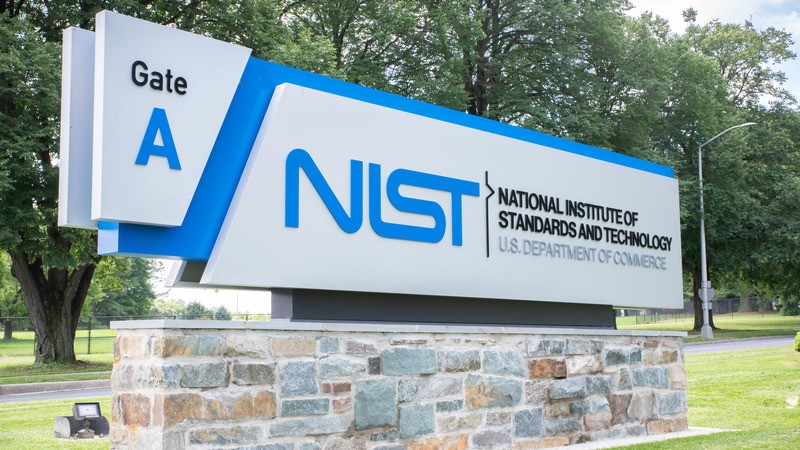
    The National Institute of Standards and Technology (NIST) released a draft guide on Aug. 19 outlining how organizations can use artificial intelligence (AI) to analyze and monitor their progress toward achieving the agency’s Cybersecurity Framework (CSF) 2.0 outcomes.

    The draft document, titled “Quick-Start Guide for Using Artificial Intelligence (AI) for CSF Analysis and Reporting,” provides sample prompts and three notional use cases for applying generative AI to CSF analysis. NIST is accepting public comments on the draft guide through Oct. 15.

    “The CSF 2.0 provides guidelines and a common language to help organizations of all sizes and sectors manage cybersecurity risks,” the guide says. “In practice, organizations are increasingly leveraging Artificial Intelligence (AI) systems to better understand, assess, prioritize, and communicate their cybersecurity efforts in alignment with CSF 2.0.”

    “For example, AI can help with analyzing, planning, implementing, and monitoring the organization’s progress toward achieving the outcomes of the CSF 2.0,” it adds.

    The first use case applies AI to evaluate an organization’s cybersecurity policy, strategy, and risk governance in alignment with the CSF 2.0 outcomes. A sample prompt directs the AI system to identify areas that are aligned, partially aligned, misaligned, or not addressed.

    The second use case shows how AI could be used “to produce a draft CSF Organization Current State Profile – mapping artifacts and personnel interview notes to CSF 2.0 outcomes, documenting any assumptions, and recording observed gaps in the interviews and evidence.”

    The third use case focuses on developing a target-state profile based on organizational artifacts. NIST said the model would reduce manual research, as well as flag “gaps or inconsistencies between stated risk priorities and the selected target tiers.”

    NIST uses the Context, Objective, Style, Tone, Audience, and Response – or CO-STAR – prompt framework in its examples. However, the agency said organizations should choose whichever prompt structure best fits their requirements.

    The draft stresses that its examples are not assessment or assurance methodologies. Organizations should review AI tools’ data-retention, training, access-control, and confidentiality settings before submitting sensitive information.

    “AI-generated content should always be reviewed by qualified personnel before being used in organizational decision-making,” the guide says. “Users are responsible for validating applicability, scope, inputs, assumptions, and outputs of AI systems.”

    Comments and proposed additional use cases may be submitted to NIST at csf@nist.gov.

    Post Views: 10

    cyber Drafts guide NIST using
    Share. Facebook Twitter Pinterest LinkedIn Tumblr Email
    Previous Article5 Real-World Use Cases for AI Agents Transforming Industries
    Next Article US warns of active cyber threat targeting critical infrastructure
    aitoday7
    • Website

    Related Posts

    AI Guides

    How to advertise on ChatGPT: A step-by

    August 27, 2026
    AI Guides

    NuScale Power Tumbles 7% Despite Deploying AI Tools, Oklo Slides 6%, Uranium Energy Dips

    August 27, 2026
    AI Guides

    Four in Five AI Tools Run with No IT Oversight, Research Finds

    August 26, 2026
    Add A Comment
    Leave A Reply Cancel Reply

    Top Posts

    Brief independent investigation of agents’ behavior, reasoning and collaboration in the OpenAI / Hugging Face hacking incident

    August 27, 20260 Views

    Fake US thinktank set up and funded by Israel sought to game AI for propaganda

    August 27, 20260 Views

    Medical Readiness Command, Europe G-6 Information Technology Team wins 2026 MEDCOM Mercury Award for HIT Team of the Year

    August 27, 20260 Views
    Stay In Touch
    • Facebook
    • YouTube
    • TikTok
    • WhatsApp
    • Twitter
    • Instagram
    Latest Reviews
    Chatbots

    OpenAI bets on families as ChatGPT goes deeper into households

    aitoday7July 11, 2026
    Generative AI

    MUSIC COMMUNITY INTRODUCES NEW LABELING PROGRAM TO DISTINGUISH GENERATIVE AI IN SOUND RECORDINGS

    aitoday7July 11, 2026
    AI News

    Safe from AI: which jobs will help you thrive in the future?

    aitoday7July 11, 2026

    Subscribe to Updates

    Get the latest tech news from FooBar about tech, design and biz.

    Most Popular

    Brief independent investigation of agents’ behavior, reasoning and collaboration in the OpenAI / Hugging Face hacking incident

    August 27, 20260 Views

    Fake US thinktank set up and funded by Israel sought to game AI for propaganda

    August 27, 20260 Views

    Medical Readiness Command, Europe G-6 Information Technology Team wins 2026 MEDCOM Mercury Award for HIT Team of the Year

    August 27, 20260 Views
    Our Picks

    OpenAI bets on families as ChatGPT goes deeper into households

    July 11, 2026

    MUSIC COMMUNITY INTRODUCES NEW LABELING PROGRAM TO DISTINGUISH GENERATIVE AI IN SOUND RECORDINGS

    July 11, 2026

    Safe from AI: which jobs will help you thrive in the future?

    July 11, 2026

    Subscribe to Updates

    Get the latest creative news from FooBar about art, design and business.

    Facebook X (Twitter) Instagram Pinterest
    • About Us
    • Get In Touch
    • Disclaimer
    • Privacy Policy
    • Terms and Conditions
    © 2026 AIToday7. All Rights Reserved.

    Type above and press Enter to search. Press Esc to cancel.