

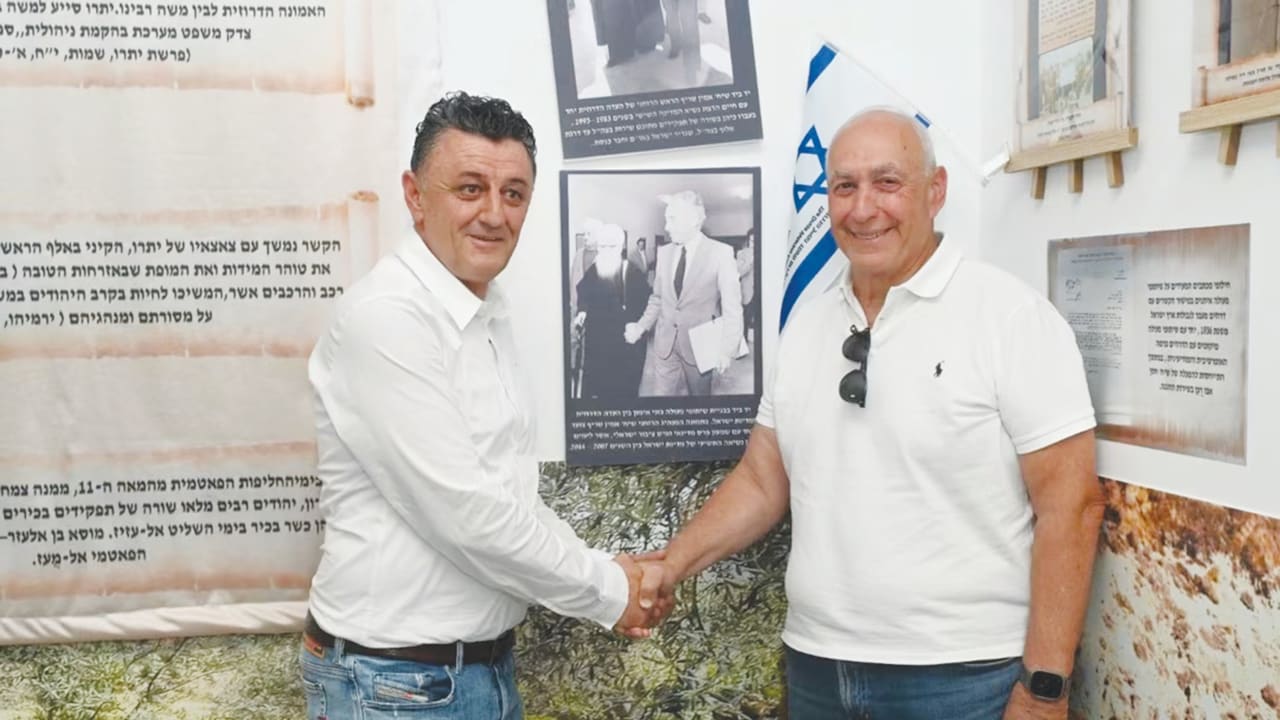
The Druze nation in Israel is known for its firm ties to the state, its resilience, and its ability to adapt. After years of preparation and effort, the Druze are widening their focus on the future and moving from inspiration to creating an infrastructure to benefit their community and Israel.
“Our young people are our future,” says Koftan Halabi, Druze hi-tech entrepreneur and founder of the Druze tech center in Isfiya.
“We proudly say ournational identity is Israeli. Most of our young people enlist in the IDF or do National Service. After completion of their service, many choose the Israel Defense Forces as their career or enter other types of security work.
“We came to the realization that there needs to be more choices, and it is our goal to provide will enable entrance into technological fields and the hi-tech job market
“In addition, we have now created a fund to advance their creative, technological ideas. Therefore, the discharged soldiers will have the monetary support to enter the hi-tech start-up ecosystem and become entrepreneurs.”
This process began in 2009, when Halabi established the Druze Veteran Association and initiated a program for Druze veterans to study at Haifa’s Technion-Israel Institute of Technology.
In 2025, Halabi led in building and opening the state-of-the-art Druze Technological and Empowerment Center (D-TEC) in Isfiya. In June of this year, the center initiated a hi-tech festival whose focus was to launch a new innovations program called BEYOND-D (Druze) and inaugurate a new investment fund connected to inspire and support new hi-tech start-ups.
“It is a historic milestone,” he proudly says, “which is the fruit of years of trust, strategic proposals, and a strong desire to pave new paths for the younger generation,” states Halabi.
A tech fair displaying new ideas is important, says lawyer Anan Kheir, one of the founders of Isfiya’s Druze tech initiative. “We take pride in opening a fund which will benefit former IDF Druze, Circassian, and Jewish soldiers in their entrepreneurial objectives. Overall, our goal is to create a practical mechanism that connects entrepreneurs with professional mentoring, strategic partners, industry leaders, and investment capital.”
Kheir explains to the Magazine that the fund is not a personal grant fund for individual soldiers, but rather an investment fund for start-ups and technology ventures. He envisions eligible applicants as the founders or team members who are working on technology ventures with a serious technological idea.
The fund will evaluate each according to the capabilities of its founding team, its product and ideas, its growth potential, as well as its connection to the goals of the fund.
“The fund,” explains Kheir, “is a vehicle to invest in ventures led or co-led by Israeli combat-discharged veterans or active-duty Israeli combat soldiers (Druze, Circassian, and Jewish) with innovative ideas and potential.”
It is intended to support Israeli hi-tech ventures at their early stages: pre-seed, seed, and Round A. The broader purpose is to open a real path for young entrepreneurs with technological potential and enable them to enter the Israeli hi-tech ecosystem, build companies, and create long-term economic leadership.
“The fund is seeking capital commitments of up to $40 million, with an initial closing possible once commitments of at least $15 mil. are secured,” Kheir continues. “The amounts invested in each start-up will depend on the stage of the company, the investment decision, the due diligence process, and the fund’s internal investment policy.”
The money, he explains, is expected to come from private investors, limited partners, and strategic investors who commit capital to the fund. “This is different from event sponsorship,” he explains. “The fund is structured as an investment vehicle, not as a donation campaign.”
Kheir points out that they will consider early-stage technology ventures in areas such as software, artificial intelligence, cyber, digital health, industrial technologies, deep-tech, security-related technologies, and other Israeli or Israeli-related innovative ideas.
Halabi says their vision is to see new hi-tech start-ups and companies in the vicinity of Druze communities across the North. “Currently, our graduates are working throughout Israel. Our investment fund will enable those who wish to develop innovative ideas and build entrepreneurship close to home.”
The recent D-TEC Druze-Tech Festival evening event was distinguished by attendance and participation of senior figures in the fields of hi-tech, investment, innovation, government, and public service: venture capital and hi-tech entrepreneur Nechemia “Chemi” Peres, co-founder and managing partner of Pitango Venture Capital and one of the founders of the Peres Center for Peace and Innovation; Maj.-Gen. (res.) Amiram Levin, co-founder of NextVision, as well as a prominent figure in Israel’s security investment and technology sectors; Scott Tobin, founding partner of Battery Ventures and a leading international investor in technology and innovation; Raanan Raz, cyber entrepreneur, former VP of R&D who led the engineering team at Datorama, and co-founder and CEO of Avalor Security, both involved in major exits; and Ran Ber, entrepreneur and leader in the field of innovation processes, who is also CEO of Beyond – Druze Innovations and Beyond Ventures, and the former director-general of the Innovation, Science and Technology Ministry.
Other guests included Hagai Reznik, chairman of the Fund and Unit for Discharged Soldiers at the Defense Ministry, who has been instrumental in promoting opportunities for discharged soldiers in education, employment and social mobility; Dr. Ramzi Halabi, chairman of the Beit Yad Labanim in the Druze community, researcher and manager promoting initiatives for economic, social, and regional development; Kheir, who, with Koftan Halabi and Ber, is one of the three founders of the Druze Investment initiative, as well as board member and legal adviser of D-TEC, and active in legal, public, and international work with a focus on innovation, economic empowerment and the advancement of the Druze community; and Shlomo Gradman, chairman of the Israeli High-Tech Association CEOs Forum and one of the leading figures in Israel’s semiconductor and innovation industries.
The participation of the senior supporters, speakers, and advisers at the Druze Tech-Fest gave not only prestige to the event but also meaning to the evening, as they shared practical knowledge and useful tips with the new entrepreneurs through panels, roundtable discussions, and informal meetings.
Hanan Markovich, CEO of the Haifa Economic Corporation (HEC), was very pleased to take part in the investors’ panel and is supportive of the Druze tech initiative.
As the CEO of a large company that is one of the driving forces in Haifa and the North, Markovich understands the importance of economic growth in undeveloped areas. HEC is a leader in large-scale, strategic projects in real estate, energy, tourism, defense technology, and venture initiatives.
Markovich says he is committed to encouraging entrepreneurship in Haifa and the North through HEC’s subsidiary and investment fund, HiCenter, which is inviting entrepreneurs to apply to its investment program.
“Haifa is a unique city where five religions [Judaism, Christianity, Islam, Druzism, and Baha’i] live side by side in a spirit of coexistence,” says Markovich.
“I share the vision of Haifa’s mayor, Yona Yahav, who has long supported strong relations with the Druze community and meaningful cooperation among the city’s diverse communities.
“With my 20 years of experience in hi-tech, I am committed to assisting in turning this vision of growth into development by supporting and developing initiatives which promote economic growth, attract hi-tech companies, and empower entrepreneurs in Haifa and the northern region.
“Tel Aviv is currently home to a large share of Israel’s start-ups,” Markovich continues. “That is a major strength. However, the right path for Israel, both [from a Zionist and economic perspective], is to develop additional hi-tech centers which will include Haifa and the North as well as in the South. Investing in start-ups beyond Tel Aviv will strengthen the country’s resilience, create new opportunities, and turn innovation into a broader national asset.”
Markovich explains that he and his fellow investment panel members discussed guiding principles and practical advice for early-stage entrepreneurs. One of the key points was the ability to tell a clear and compelling story, and to present it effectively in English as well as in Hebrew, since many of the major markets and investors are overseas.
He also emphasizes the importance of the founding team. “Many start-ups are required to pivot during the life of the company,” says Markovich. “When that happens, the strength, flexibility, and complementary capabilities of the team often become a decisive factor.”
He explains that the panel also discussed the need to focus on solving an acute problem in a large market, which significantly improves the start-up’s chances of success. In addition, Markovich highlights the importance of strong intellectual property and its proper protection to make it difficult for competitors to copy.
“Turning an innovative idea into a successful company is never simple,” Markovich states, “but it is one of the most exciting journeys an entrepreneur can take.”
Halabi is optimistic the tech initiative will succeed.
