Close Menu
AIToday7

    Subscribe to Updates

    Get the latest creative news from FooBar about art, design and business.

    What's Hot

    The Gravel Teens work for OpenAI now

    August 30, 2026

    Apple CarPlay gaining a new AI chatbot app before Siri AI arrives

    August 30, 2026

    Review: $150 actioncam is a surprisingly capable GoPro alternative

    August 30, 2026
    Facebook X (Twitter) Instagram
    Trending
    • The Gravel Teens work for OpenAI now
    • Apple CarPlay gaining a new AI chatbot app before Siri AI arrives
    • Review: $150 actioncam is a surprisingly capable GoPro alternative
    • Dual-use technology startups flourish
    • Smartphones could become illegal in NI schools
    • Deepfakes rarely break authentication. They walk around it.
    • I Gave an AI Assistant Nine Faculties Instead of a Bigger Prompt. Here’s Why.
    • TIME Reveals the 2026 TIME100 AI List of the World’s Most Influential People in Artificial Intelligence
    Facebook X (Twitter) Instagram Pinterest Vimeo
    AIToday7
    • Home
    • AI News
    • Tech News
    • AI Guides
    • Chatbots
    • Cybersecurity
    • Gadgets
    • More
      • Generative AI
      • Startups
    AIToday7
    Home»Cybersecurity»Deepfakes rarely break authentication. They walk around it.
    Cybersecurity

    Deepfakes rarely break authentication. They walk around it.

    aitoday7By aitoday7August 30, 2026No Comments4 Mins Read
    Share Facebook Twitter Pinterest LinkedIn Tumblr Reddit Telegram Email
    Deepfakes rarely break authentication. They walk around it.
    Share
    Facebook Twitter LinkedIn Pinterest Email

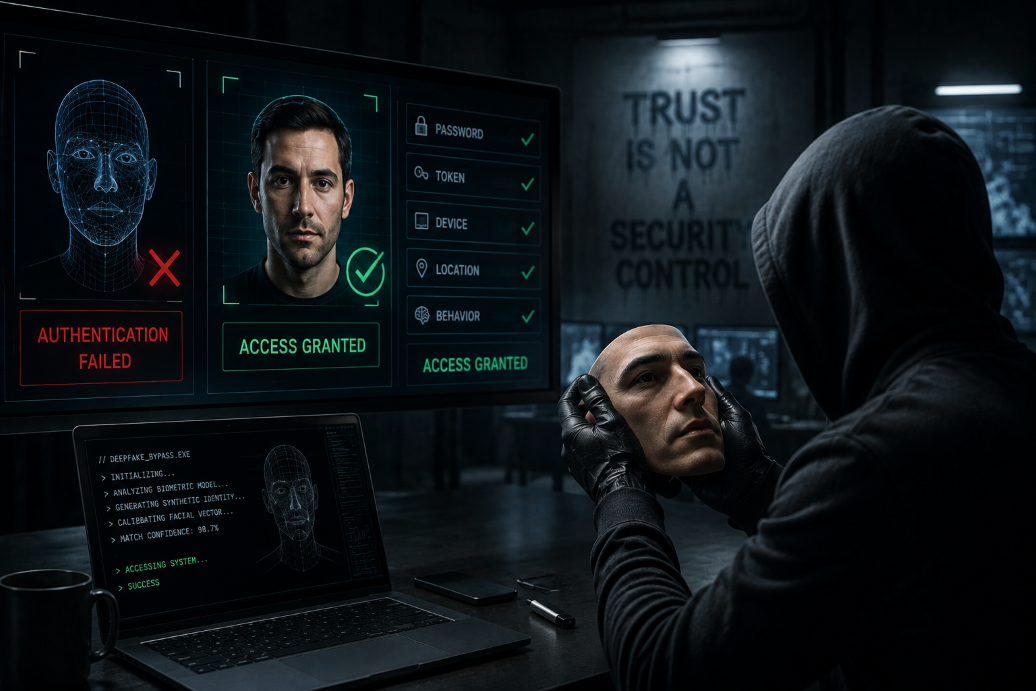
    Many organizations have been actively strengthening their identity security efforts this year, but attackers are keeping up. They’re growing savvier and more advanced, often diverting new safeguards with ease. A multi-factor authentication (MFA) prompt, conditional access policy or device compliance check may all be working exactly as configured. Yet an attacker can still bypass these measures by targeting the processes behind account resets and recovery, using tactics that often go unnoticed to the naked eye.

    The most common is deepfakes. Gartner reports that over a 12-month period, 62% of organizations experienced a deepfake attack, and financial losses from deepfake fraud are estimated at roughly $1.1 billion annually. 

    Unfortunately, these attacks aren’t a future worry; they are here, and they can have significant business consequences. Security leaders must reevaluate their current authentication tech stack and determine if they can truly verify their employees and customers in ways that can’t be easily imitated or faked by cybercriminals.

    The overlooked layer of identity security

    Most identity security programs focus on the primary login path, and that path has improved a lot. What doesn’t get the same scrutiny are account backup and recovery systems that can step in when primary access methods fail – whether that be a lost phone, new laptop, locked account, or customer who can’t receive a one-time code.

    These fallback routes are usually owned by different internal teams, designed around availability rather than assurance, and measured by user satisfaction and time-to-recovery. They are the operational pressure valve for an identity security system, making them a prime target for attackers.

    An organization may require thorough authentication for primary login access, only to rely on insecure processes like a one-time password (OTP)now easily exploitable and don’t provide sufficient evidence that someone is who they claim to be

    Traditional verification methods don’t hold up to advanced threats

    Traditional verification methods like SMS and OTP often rely on two things. The first is knowledge: a date of birth, the last four digits of an identifier, a recent transaction, an employee number or other personal information. Years of breaches, data brokerage, and public social media accounts have made that information increasingly unreliable. An attacker who has spent time researching a target may know those details even better than the actual user. 

    The second is human judgment. An agent may listen to a caller, consider the context, and determine whether the person sounds like who they claim to be. Until recently, that was an imperfect but semi-reliable safeguard. Deepfakes have changed this whole system. A few minutes of audio from a conference talk, podcast or recorded webinar can provide enough material to create a convincing synthetic voice. Video and images can be manipulated in similar ways. As these tools become easier to access, organizations cannot assume that audio and video recordings provide sufficient identity verification.

    Rebuilding the authentication path around stronger evidence

    A recovery path should not accept weaker evidence than the path it is recovering. Organizations need to level up their log in methods with more reliable authenticators to ensure that only verified users are granted access.

    The only way for organizations to mitigate their risk of deepfake fraud is by transitioning to hardware-based authentication that ties a user’s identity to a cryptographic element in physical hardware, like a SIM card that is verified via the device’s mobile carrier to confirm that a login request was made honestly, by the legitimate user. This approach is nearly impossible for fraudsters to compromise, eliminating the need for organizations to gamble on verification by voice, personal information, or login methods like SMS-OTP or MFA.

    Cyberattacks and deepfakes will continue to evolve, and security teams cannot rely on their ability to spot a fake every time. Instead, the stronger approach is to build an authentication strategy on hardware, that can establish trust without having to determine whether someone is legitimate.

    Post Views: 5

    authentication break Deepfakes rarely They
    Share. Facebook Twitter Pinterest LinkedIn Tumblr Email
    Previous ArticleI Gave an AI Assistant Nine Faculties Instead of a Bigger Prompt. Here’s Why.
    Next Article Smartphones could become illegal in NI schools
    aitoday7
    • Website

    Related Posts

    Cybersecurity

    Optimum Launches Advanced Security as Americans Seek Stronger Online Protection

    August 29, 2026
    Cybersecurity

    Cybersecurity Stocks Rally on Twin Earnings Beats: Okta Spikes 22%, CrowdStrike Jumps 13%

    August 29, 2026
    Cybersecurity

    Google, Microsoft and OpenAI among 100 firms calling for better cyber defences

    August 28, 2026
    Add A Comment
    Leave A Reply Cancel Reply

    Top Posts

    The Gravel Teens work for OpenAI now

    August 30, 20260 Views

    Apple CarPlay gaining a new AI chatbot app before Siri AI arrives

    August 30, 20260 Views

    Review: $150 actioncam is a surprisingly capable GoPro alternative

    August 30, 20260 Views
    Stay In Touch
    • Facebook
    • YouTube
    • TikTok
    • WhatsApp
    • Twitter
    • Instagram
    Latest Reviews
    Chatbots

    OpenAI bets on families as ChatGPT goes deeper into households

    aitoday7July 11, 2026
    Generative AI

    MUSIC COMMUNITY INTRODUCES NEW LABELING PROGRAM TO DISTINGUISH GENERATIVE AI IN SOUND RECORDINGS

    aitoday7July 11, 2026
    AI News

    Safe from AI: which jobs will help you thrive in the future?

    aitoday7July 11, 2026

    Subscribe to Updates

    Get the latest tech news from FooBar about tech, design and biz.

    Most Popular

    The Gravel Teens work for OpenAI now

    August 30, 20260 Views

    Apple CarPlay gaining a new AI chatbot app before Siri AI arrives

    August 30, 20260 Views

    Review: $150 actioncam is a surprisingly capable GoPro alternative

    August 30, 20260 Views
    Our Picks

    OpenAI bets on families as ChatGPT goes deeper into households

    July 11, 2026

    MUSIC COMMUNITY INTRODUCES NEW LABELING PROGRAM TO DISTINGUISH GENERATIVE AI IN SOUND RECORDINGS

    July 11, 2026

    Safe from AI: which jobs will help you thrive in the future?

    July 11, 2026

    Subscribe to Updates

    Get the latest creative news from FooBar about art, design and business.

    Facebook X (Twitter) Instagram Pinterest
    • About Us
    • Get In Touch
    • Disclaimer
    • Privacy Policy
    • Terms and Conditions
    © 2026 AIToday7. All Rights Reserved.

    Type above and press Enter to search. Press Esc to cancel.