

Key Takeaways
-
The U.S. Army and Lockheed Martin tested a GMLRS rocket that changed targets midflight and destroyed a moving target.
-
The test used a HIMARS launcher, the Strigo datalink and the RIG-360 guidance system.
-
The technology could let commanders adjust targeting decisions after launch as battlefield conditions change.
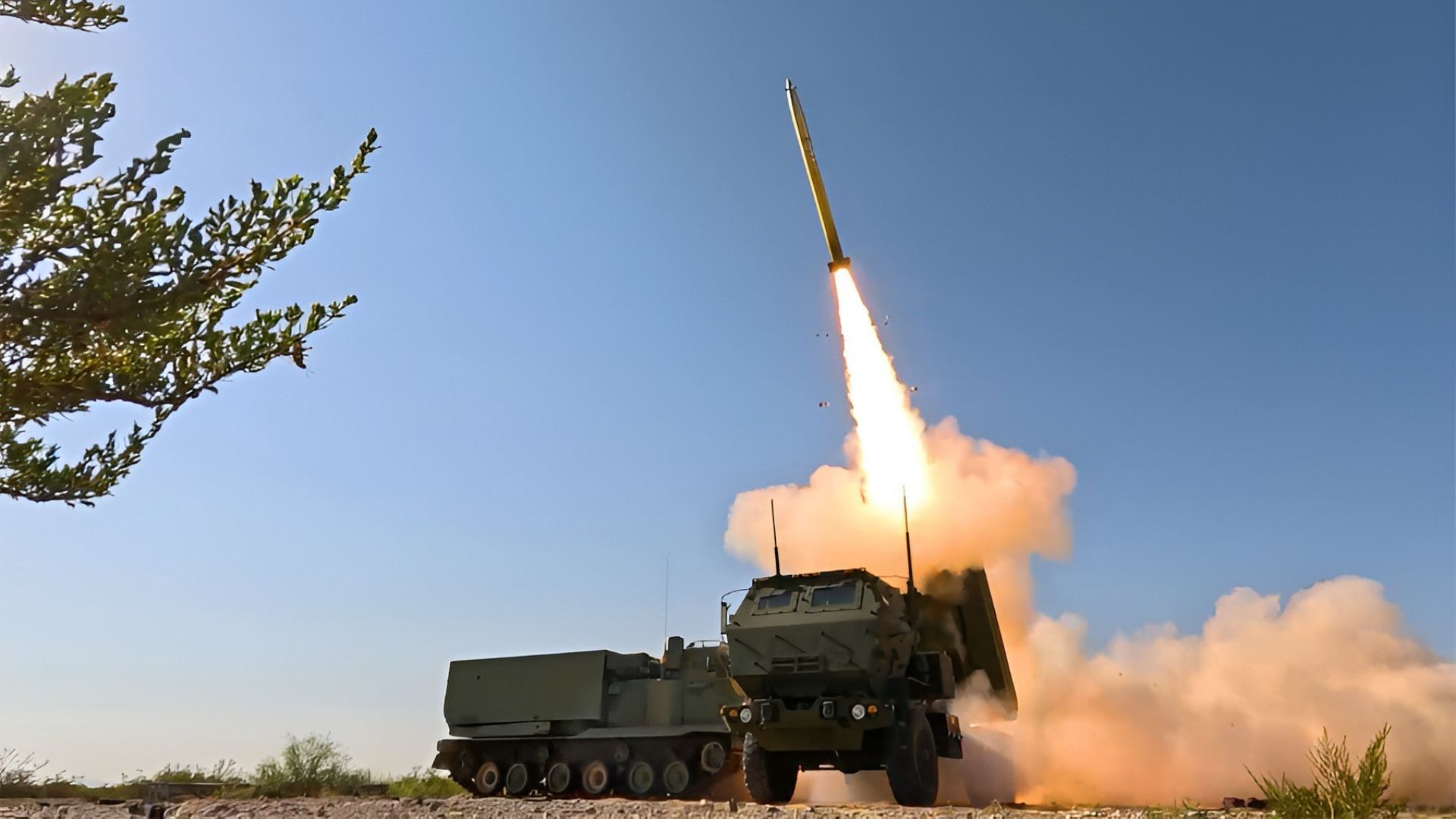
Lockheed Martin has demonstrated a new way to redirect a rocket after launch, potentially giving U.S. Army units greater control over precision strikes. The test showed that an existing Guided Multiple Launch Rocket System (GMLRS) rocket could change targets during flight and destroy a moving target.
The demonstration took place at White Sands Missile Range in New Mexico. Lockheed Martin worked with the U.S. Army to integrate a communications link and guidance system into the rocket’s existing architecture. The approach could help the Army adapt its precision fires capabilities without requiring a fundamental redesign of the weapon.
Redirecting rockets in flight
The test began with a GMLRS rocket launched from a High Mobility Artillery Rocket System (HIMARS). After launch, the team used Lockheed Martin’s Strigo datalink and Remote Interceptor Guidance-360 (RIG-360) system to send updated targeting information to the rocket.
The rocket then adjusted its target assignment and successfully struck a moving target. The result demonstrated how communication between a weapon and external targeting systems could influence an engagement after the rocket leaves its launcher.
Conventional rocket artillery missions rely heavily on targeting information established before firing. Updating that information during flight introduces another layer of flexibility, particularly when a target changes position or battlefield conditions shift.
Lockheed Martin funded the integration work internally. The demonstration focused on connecting existing technologies rather than developing an entirely new rocket. That distinction could make the approach relevant to weapons already in the Army’s inventory.
More from Military
See All
MilitarySpy drone integrated with mortar rounds, grenades can conduct long-range strikes
MilitarySaab naval radar with 155-mile range resists jamming to detect aircraft and missiles
MilitaryAutonomous aircraft team up to search for missing person in major ace plans for uncrewed combat aircraft
MilitaryUS Navy picks new rocket booster for cruise missile claimed to reach 1,150 miles
Connected kill chain
The test also points to a broader shift in how the Army could coordinate precision strikes. Networked targeting allows information from sensors and other battlefield assets to reach weapon systems, potentially helping commanders respond to changing threats.
A moving target presents a different challenge from a stationary aim point. Its position can change between launch and impact, making updated information valuable during an engagement. An in-flight targeting update could give commanders another option when an original firing plan no longer matches battlefield conditions.
The capability does not eliminate the need for accurate targeting data or reliable communications. Its practical value will depend on how effectively the systems exchange information under operational conditions. Nevertheless, the successful demonstration provides evidence that existing rocket artillery can support more dynamic targeting methods.
Lockheed Martin Advanced Programs Vice President Randy Crites said the integration brings together established company technologies to give troops greater flexibility. He also emphasized the importance of integrating proven systems to help commanders respond to complex battlefield situations.
Future missiles could benefit
The same integration package could extend beyond the standard GMLRS. Lockheed Martin identified Extended Range GMLRS and the Precision Strike Missile (PrSM) as potential applications for the technology.
Extended Range GMLRS is designed to reach targets beyond the standard rocket’s range. PrSM is a next-generation surface-to-surface missile developed for the Army’s HIMARS and M270 launcher platforms. Applying similar networking capabilities to these weapons could expand the options available for precision engagements.
However, the demonstration does not establish that every compatible weapon can already receive midflight target updates. Each application would require appropriate integration and testing before operational use.
The central engineering challenge is connecting weapons to a wider targeting network without replacing their underlying designs. If further testing validates the approach, the Army could gain more flexibility from its existing launchers and munitions while preparing future precision fires systems for increasingly mobile battlefield threats.
Aamir is a seasoned tech journalist with experience at Exhibit Magazine, Republic World, and PR Newswire. With a deep love for all things tech and science, he has spent years decoding the latest innovations and exploring how they shape industries, lifestyles, and the future of humanity.
- 1Super-strong 600 MPa metal alloy could transform future US nuclear reactors
- 21.1 GW boost to power 930,000 homes: US to charge up nuclear reactor capacity
- 3110 humanoid robots dance in perfect sync to set Guinness World Record in China
- 4New deck-mounted launcher could help US Navy warships unleash missiles for longer
- 5China’s 5,000-mile H-6K bomber shows off pods built to disrupt enemy radar systems
