
Close Menu
AIToday7

    Subscribe to Updates

    Get the latest creative news from FooBar about art, design and business.

    What's Hot

    Even Realities G2 review: Smart glasses, stupid controls

    October 19, 2026

    Nathan Fielder’s Surprise Call From Elizabeth Holmes: ‘I Trust You’

    October 19, 2026

    REG – Technology Minerals – Result of General Meeting

    October 19, 2026
    Facebook X (Twitter) Instagram
    Trending
    • Even Realities G2 review: Smart glasses, stupid controls
    • Nathan Fielder’s Surprise Call From Elizabeth Holmes: ‘I Trust You’
    • REG – Technology Minerals – Result of General Meeting
    • What’s the point of the 2.5G Ethernet port on your router?
    • Democrats think cracking down on AI could give them an edge
    • Rozvelt built a high-tech mask for hunters. Defence buyers see something bigger. | BetaKit
    • AI chip startup Tenstorrent more than doubles its valuation to $6.2 billion in funding round
    • How Emotions Drive Students’ Growing Dependence on AI Writing Tools
    Facebook X (Twitter) Instagram Pinterest Vimeo
    AIToday7
    • Home
    • AI News
    • Tech News
    • AI Guides
    • Chatbots
    • Cybersecurity
    • Gadgets
    • More
      • Generative AI
      • Startups
    AIToday7
    Home»Generative AI»Engram Turns AI Hallucinations Into a Musical Instrument
    Generative AI

    Engram Turns AI Hallucinations Into a Musical Instrument

    aitoday7By aitoday7September 28, 2026No Comments4 Mins Read
    Share Facebook Twitter Pinterest LinkedIn Tumblr Reddit Telegram Email
    Engram Turns AI Hallucinations Into a Musical Instrument
    Share
    Facebook Twitter LinkedIn Pinterest Email

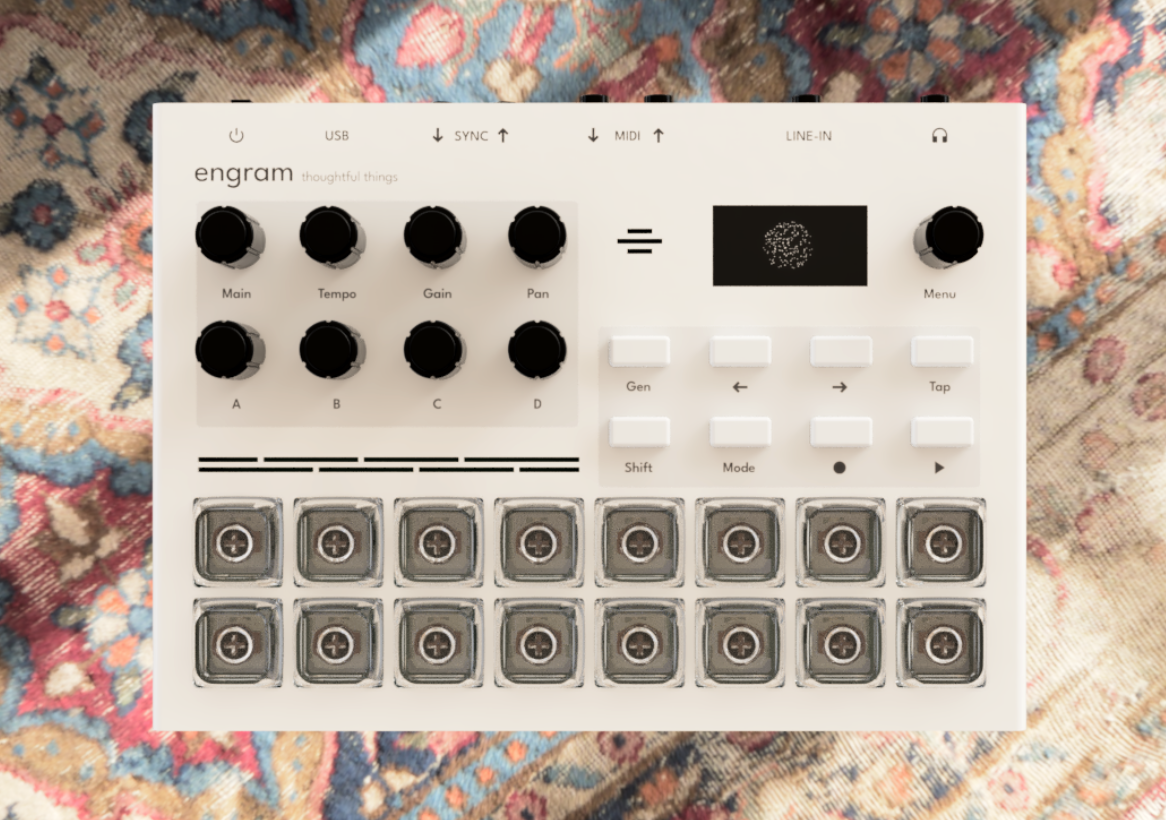
    Most AI music tools are still selling the same fantasy: describe a song, press a button and receive something polished enough to share. Engram takes the opposite route. It is a hardware sampler from Thoughtful Things that treats AI’s strange, broken output as the point.

    The device combines a sampler and groovebox workflow with a small audio model that runs directly on the hardware. There is no internet connection, companion app or subscription requirement. Instead of hiding the model behind a clean interface, Engram gives musicians controls for pushing it into unfamiliar territory.Advertisement

    Engram makes failure part of the interface

    Thoughtful Things describes Engram as a device for “audio model bending,” a neural-network version of circuit bending. Users can process their own recordings, generate short bursts of sound and manipulate the results as samples. The product page lists an embedded neural audio codec, model-bending controls, pluggable audio models, MIDI input and output, CV sync and gate connections, stereo line input, headphone output and an onboard microphone.

    That feature list matters because Engram is not positioned as an automated songwriter. Its job is to create material that a musician can cut, sequence, distort and place inside a larger creative process. The official product page calls it a “playable, breakable” audio model. The phrase is unusually revealing. The model is not presented as an authority that should produce the right answer. It is presented as an instrument that can be pushed, interrupted and made unpredictable.

    The Verge’s report adds a useful detail from the launch campaign: founder Evan King demonstrates the device by asking for “piano” and receiving something only vaguely piano-like. That is not a failed product demo. It is the product argument. Engram is designed for the moment when the output is recognisable enough to provoke an idea, but wrong enough to remain interesting.

    The bigger shift is from generation to participation

    Engram points toward a different role for AI in creative tools. The first wave of consumer-facing music products focused on completion. Their value was speed: give the system a prompt and let it produce a finished track. Engram focuses on intervention. The musician remains inside the loop, shaping the conditions under which the model misbehaves.

    That distinction also explains the emphasis on local processing. An offline device makes the AI feel more like part of a studio setup than a remote service. It reduces dependence on accounts, connectivity and recurring access, while giving the user a physical relationship with the model’s limitations. The product page also says the firmware is intended to support new audio models, which could make the hardware more open to experimentation than a conventional closed music appliance.

    There is a clear cultural tension here. AI companies have spent years trying to make machine output feel smoother, more human and more commercially useful. Engram suggests that some creators may want the opposite: visible seams, unstable textures and evidence that the machine does not fully understand what it is doing.

    That does not make Engram a mass-market replacement for cloud music generators. Thoughtful Things describes it as a research prototype, and the limited Kickstarter run reportedly starts at $675, with a future retail price expected to be higher. Adoption will depend on whether musicians find the hands-on workflow inspiring enough to justify specialist hardware.

    But the strategic consequence is larger than the product’s likely audience. If generative AI becomes most valuable when it gives creators something to react against, then the winning creative tools may not be the ones that eliminate friction. They may be the ones that make productive friction easier to control.

    Also Read:

      • YouTube Is Changing What Mukbang Creators Can Monetize

      • Netflix Is Bringing Sam and Colby’s Hell Week to a New Audience
      • Apple Reportedly Wants Beats To Bring Game Controllers To The iPhone
    Post Views: 14

    Engram Hallucinations into Musical turns
    Share. Facebook Twitter Pinterest LinkedIn Tumblr Email
    Previous ArticleCallRail Makes ChatGPT Ads Measurable For SMBs And Marketing Agencies
    Next Article The Generative AI Report Sucks
    aitoday7
    • Website

    Related Posts

    Generative AI

    How Emotions Drive Students’ Growing Dependence on AI Writing Tools

    October 19, 2026
    Generative AI

    The Gap That No LLM Can Close

    October 19, 2026
    Generative AI

    The Curse Of Generative AI

    October 18, 2026
    Add A Comment
    Leave A Reply Cancel Reply

    Top Posts

    Even Realities G2 review: Smart glasses, stupid controls

    October 19, 20260 Views

    Nathan Fielder’s Surprise Call From Elizabeth Holmes: ‘I Trust You’

    October 19, 20260 Views

    REG – Technology Minerals – Result of General Meeting

    October 19, 20260 Views
    Stay In Touch
    • Facebook
    • YouTube
    • TikTok
    • WhatsApp
    • Twitter
    • Instagram
    Latest Reviews
    Uncategorized

    Architecting memory and storage in the AI era

    aitoday7September 4, 2026
    Uncategorized

    Roland Releases Melody Flip, an AI Melody-Generation Plug-In for DAWs

    aitoday7September 4, 2026
    Uncategorized

    Home Depot Labor Day Sale (2026): BOGO on Best Grills and Tools

    aitoday7September 4, 2026

    Subscribe to Updates

    Get the latest tech news from FooBar about tech, design and biz.

    Most Popular

    Even Realities G2 review: Smart glasses, stupid controls

    October 19, 20260 Views

    Nathan Fielder’s Surprise Call From Elizabeth Holmes: ‘I Trust You’

    October 19, 20260 Views

    REG – Technology Minerals – Result of General Meeting

    October 19, 20260 Views
    Our Picks

    Architecting memory and storage in the AI era

    September 4, 2026

    Roland Releases Melody Flip, an AI Melody-Generation Plug-In for DAWs

    September 4, 2026

    Home Depot Labor Day Sale (2026): BOGO on Best Grills and Tools

    September 4, 2026

    Subscribe to Updates

    Get the latest creative news from FooBar about art, design and business.

    Facebook X (Twitter) Instagram Pinterest
    • About Us
    • Get In Touch
    • Disclaimer
    • Privacy Policy
    • Terms and Conditions
    © 2026 AIToday7. All Rights Reserved.

    Type above and press Enter to search. Press Esc to cancel.