
Close Menu
AIToday7

    Subscribe to Updates

    Get the latest creative news from FooBar about art, design and business.

    What's Hot

    OpenAI says GPT-6.1 Sol is dramatically better at migrating legacy code

    October 20, 2026

    Government tests cyber resilience in tabletop exercise

    October 20, 2026

    Anthropic Will Be The Last AI IPO Of 2026, As Industry Collapses

    October 20, 2026
    Facebook X (Twitter) Instagram
    Trending
    • OpenAI says GPT-6.1 Sol is dramatically better at migrating legacy code
    • Government tests cyber resilience in tabletop exercise
    • Anthropic Will Be The Last AI IPO Of 2026, As Industry Collapses
    • AI challenges maths by solving the unsolvable
    • Figma co-founder Dylan Field thinks MCP is not a perfect protocol
    • US orders federal agencies to remove China’s DeepSeek AI from their systems
    • Eka is worth $1.45B thanks to a physical AI model that has experts raving
    • Science Archives – Interesting Engineering
    Facebook X (Twitter) Instagram Pinterest Vimeo
    AIToday7
    • Home
    • AI News
    • Tech News
    • AI Guides
    • Chatbots
    • Cybersecurity
    • Gadgets
    • More
      • Generative AI
      • Startups
    AIToday7
    Home»Gadgets»The Biggest Map of Roman Roads Ever Made Still Isn’t Big Enough
    Gadgets

    The Biggest Map of Roman Roads Ever Made Still Isn’t Big Enough

    aitoday7By aitoday7September 15, 2026No Comments5 Mins Read
    Share Facebook Twitter Pinterest LinkedIn Tumblr Reddit Telegram Email
    The Biggest Map of Roman Roads Ever Made Still Isn't Big Enough
    Share
    Facebook Twitter LinkedIn Pinterest Email

    Last year, archaeologist Tom Brughmans and colleagues released itiner-e—the largest map of the Roman road system, covering 186,411 miles (300,000 kilometers). Since then, the researchers have been picking apart their database for new insights into these famous roads. Turns out, a lot of what we assume about Roman roads may be wrong.

    To Gizmodo, Brughmans explained that the latest findings, published today in Nature Communications, bust several popular myths about Roman roads. First, despite the popular saying, not all roads lead to Rome, and networks were more effectively distributed throughout the Roman Empire. Second, Roman roads weren’t as exceptionally straight as previously thought. Third, the idea that Roman roads have persisted for so long that we’re still walking on them might be an overstatement. The overall takeaway is that, because the Roman road grid was so extensive—not even itiner-e covers everything, Brughmans noted—generalized assumptions will probably fall short of describing these ancient networks.

    “I found it hugely frustrating that we simultaneously seemed to know so much and so little about Roman roads,” said Brughmans, of Aarhus University in Denmark. “But most frustrating is that these easily dismissible assumptions prevented scholars from asking the really interesting questions underpinning them.”

    An innovation

    According to Brughmans, Roman roads represented the “first continental-scale transport network in human history.” This enabled the transmission of people, animals, disease, goods, and ideas, the researchers wrote. The system represented a mix of newly built roads and upgrades to existing ones; the roads supported the Roman Empire’s conquest of new regions in addition to a vast trading network. The latter included smaller transactions in local communities for buying and selling necessities like produce.

    “The system was crucial to keep a 1 million population alive in the capital city, Rome, which was highly dependent on the import of grain all the way from Alexandria in Egypt,” Brughmans explained. “The roads reveal so much more than Roman emperors’ politics and military campaigns: they shaped the lives of the ‘silent majority.’”
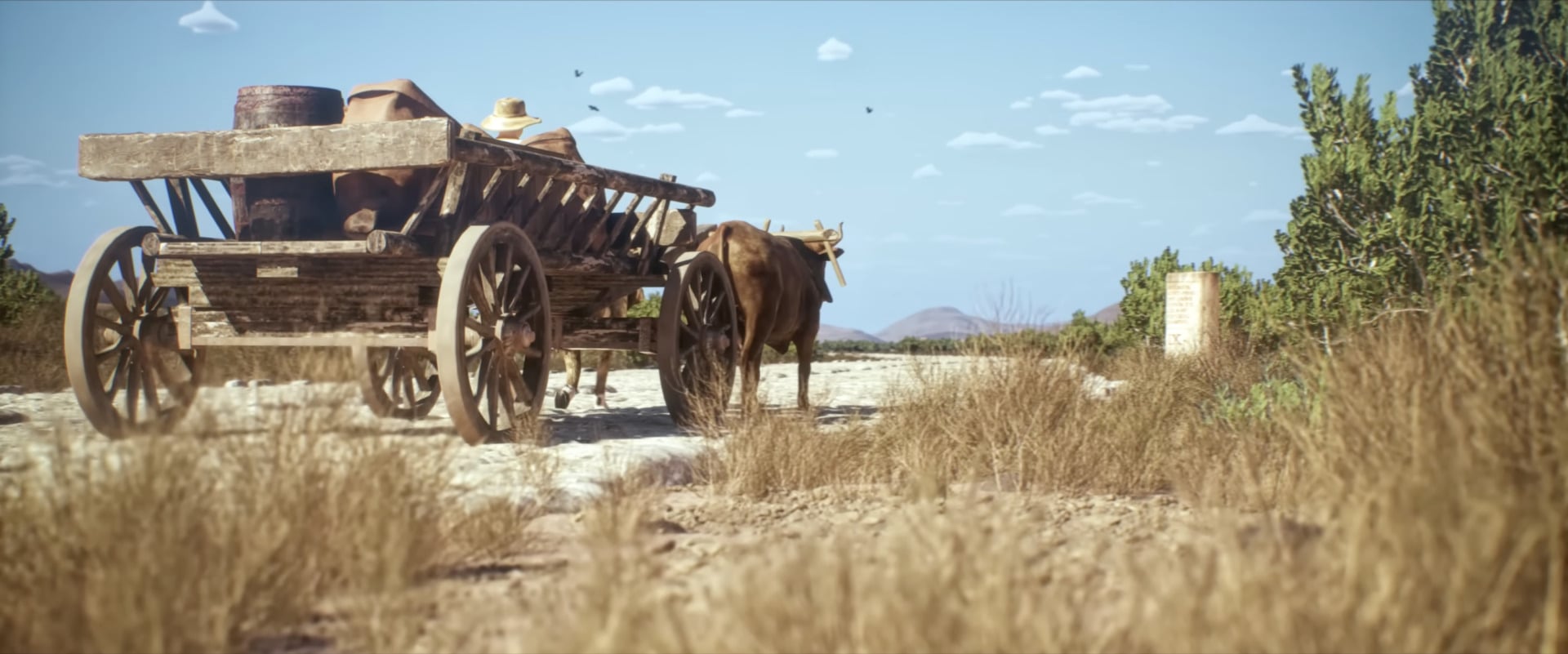
    Oxcart Roman Road Concept
    An artist’s impression of an oxcart on a dual-lane road approaching a milestone marker. Roman roads in busy areas could have directional lanes like here near the ancient city of Timgad in Algeria. Credit: Itiner-e/Artas Media

    That said, despite scholars’ long-time interest in Roman roads, our understanding of them has largely depended on qualitative studies based on snippets of direct and indirect evidence, according to the paper. The goal of the latest study, therefore, was to conduct a formal quantitative assessment of Roman roads. Needless to say, the team, having put together itiner-e, was in an excellent position to pursue this project.

    The debunk

    The latest analysis began with three common assumptions: the centrality of Rome with regard to the network, the roads’ topological nature, and their continuity to the present day. Exploring these questions led to other inquiries, Brughmans explained. For instance, if the roads didn’t just lead to Rome, where did they go, and why? How did local landscapes affect the course of roads? How did the roads change over the past 2,000 years?
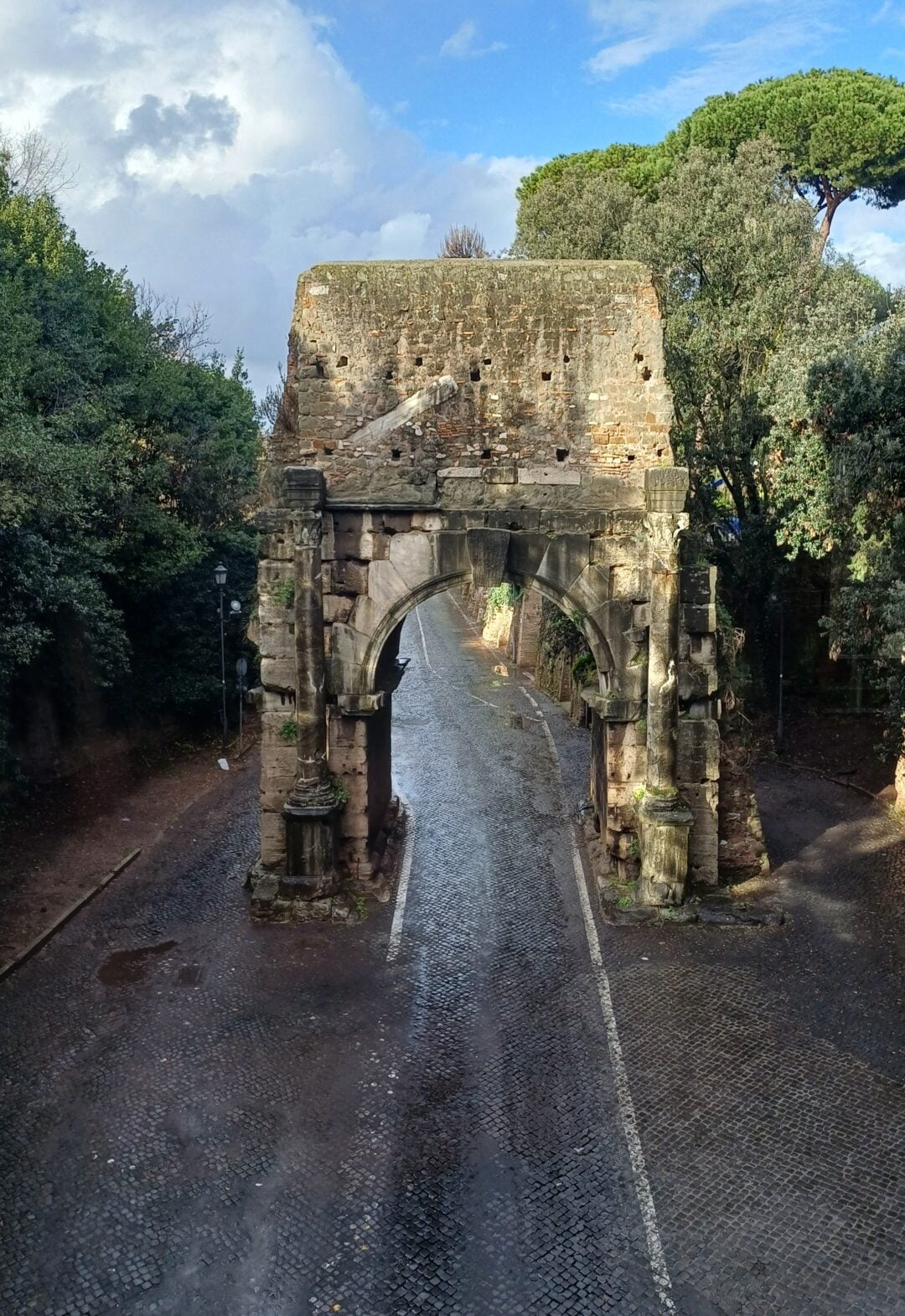
    Arch Of Drusus Rome
    So-called Arch of Drusus in Rome, near the start of the Via Appia. This was an ancient road over 2000 years ago, and is still in use as a road today. Credit: Tom Brughmans

    As for the first question, the team found that, while Rome did serve as a center for Mediterranean shipping, the overall network was more broadly distributed throughout the empire, especially around provincial capitals. This probably came in handy for provincial administration and tax collection. Meanwhile, Constantinople, which became the capital in the fourth century, was actually more of a “central” location for the empire, “way more so than Rome,” Brughmans added.

    The idea of straight Roman roads comes from examples likever, roads were straight only if the local terrain allowed for it, according to the paper. The connection between Roman and modern roads wasn’t as strong as previously believed. Some older roads did survive, and of those some stayed the same while others were renovated following the Industrial Revolution. Others simply disappeared over time

    Not all roads…

    That said, the team noted in the paper that it used the “best available,” not necessarily complete, dataset of Roman roads, although the researchers made sure to run robustness checks on their analyses. Another important caveat is that the Roman road system itself came from earlier routes and evolved with the empire—as well as the societies that followed the Romans.
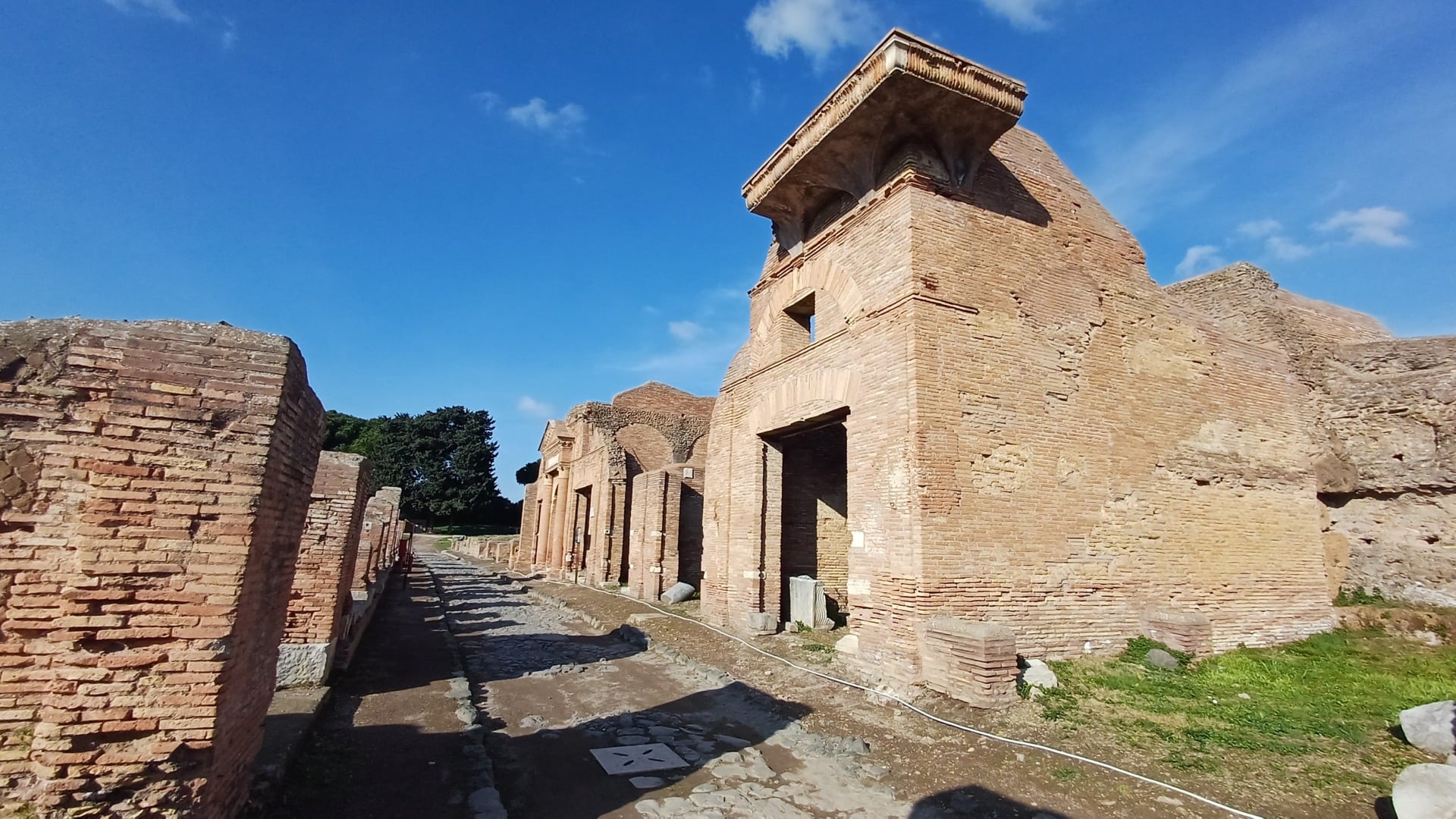
    City Streets Ostia 2
    City streets in Ostia, the ancient sea port of Rome at the mouth of the river Tiber. Credit: Tom Brughmans

    “Our research reveals that this is just the tip of the iceberg: the Roman road system is way more extensive than even our work reveals,” Brughmans said. “The multi-scalar nature of our results fascinates me. The continental-scale patterning that emerges from millions of local histories. It is baffling to realize that infrastructure built two thousand years ago still affects peoples’ interactions in the present.”

    Post Views: 9

    biggest Ever Human History Roads Roman
    Share. Facebook Twitter Pinterest LinkedIn Tumblr Email
    Previous ArticleTP-Link’s New 4K Video Doorbell Sounds Like an All-Seeing, Subscription
    Next Article IBC 2026: Adobe builds GenAI directly into Premiere & After Effects
    aitoday7
    • Website

    Related Posts

    Gadgets

    11 Of The Best-Sounding Turbocharged Engines Ever Made

    October 19, 2026
    Gadgets

    Scientists Just Revived Pig Kidneys Frozen for a Year. It Could Rewrite the Future of Organ Transplants

    October 19, 2026
    Gadgets

    Mike Flanagan’s ‘Dark Tower’ Plan Is to Be Faithful

    October 17, 2026
    Add A Comment
    Leave A Reply Cancel Reply

    Top Posts

    OpenAI says GPT-6.1 Sol is dramatically better at migrating legacy code

    October 20, 20260 Views

    Government tests cyber resilience in tabletop exercise

    October 20, 20260 Views

    Anthropic Will Be The Last AI IPO Of 2026, As Industry Collapses

    October 20, 20260 Views
    Stay In Touch
    • Facebook
    • YouTube
    • TikTok
    • WhatsApp
    • Twitter
    • Instagram
    Latest Reviews
    Uncategorized

    Architecting memory and storage in the AI era

    aitoday7September 4, 2026
    Uncategorized

    Roland Releases Melody Flip, an AI Melody-Generation Plug-In for DAWs

    aitoday7September 4, 2026
    Uncategorized

    Home Depot Labor Day Sale (2026): BOGO on Best Grills and Tools

    aitoday7September 4, 2026

    Subscribe to Updates

    Get the latest tech news from FooBar about tech, design and biz.

    Most Popular

    OpenAI says GPT-6.1 Sol is dramatically better at migrating legacy code

    October 20, 20260 Views

    Government tests cyber resilience in tabletop exercise

    October 20, 20260 Views

    Anthropic Will Be The Last AI IPO Of 2026, As Industry Collapses

    October 20, 20260 Views
    Our Picks

    Architecting memory and storage in the AI era

    September 4, 2026

    Roland Releases Melody Flip, an AI Melody-Generation Plug-In for DAWs

    September 4, 2026

    Home Depot Labor Day Sale (2026): BOGO on Best Grills and Tools

    September 4, 2026

    Subscribe to Updates

    Get the latest creative news from FooBar about art, design and business.

    Facebook X (Twitter) Instagram Pinterest
    • About Us
    • Get In Touch
    • Disclaimer
    • Privacy Policy
    • Terms and Conditions
    © 2026 AIToday7. All Rights Reserved.

    Type above and press Enter to search. Press Esc to cancel.