
How to advertise on ChatGPT: A step-by-step guide for businesses
ChatGPT is becoming a new advertising channel for brands looking to reach consumers while they research products, compare options and make purchase decisions. OpenAI has expanded ChatGPT Ads beyond its initial US test, with advertising now rolling out across multiple markets and a self-serve Ads Manager being introduced alongside agency and technology partners.
For businesses looking to get started, the process begins with creating an advertiser account and providing basic company and targeting information.
What are ChatGPT Ads?
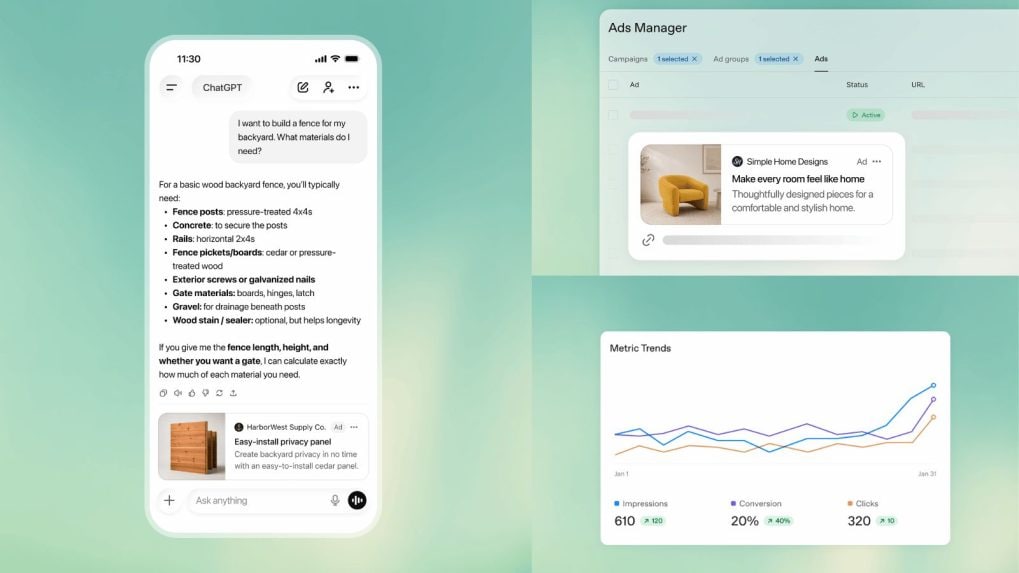
ChatGPT Ads are paid placements that can appear alongside ChatGPT conversations. OpenAI says ads are designed to reach users when they are exploring options, comparing alternatives or making decisions.
Importantly, OpenAI says advertisements are separate from ChatGPT’s answers. Advertisers cannot influence, rank or alter the responses generated by the model. Ads are also clearly labelled as sponsored content.
Who can advertise on ChatGPT?
Businesses can access ChatGPT advertising through OpenAI’s Ads Manager in supported markets. OpenAI also works with agency and technology partners to facilitate advertising campaigns.
The organisation type selected during the sign-up process can include:
- Agency – for agencies managing campaigns on behalf of clients.
- Advertiser – for a company promoting its own products or services.
- Technology partner – for eligible advertising technology companies working with OpenAI.
- Other – for organisations that do not fit the listed categories.
OpenAI has previously worked with agency partners including Dentsu, Omnicom, Publicis and WPP, as well as technology partners such as Adobe, Criteo, Kargo, Pacvue and StackAdapt.
1. Go to OpenAI’s advertising platform
Businesses can start through OpenAI Ads. OpenAI says advertisers can use Ads Manager to create accounts, build campaigns and manage advertising activity.
For larger or more complex advertising requirements, businesses can also request sales support from OpenAI.
2. Create an advertiser account
The first step is to create an Ads Manager account using an OpenAI account. The account setup process requires businesses to provide information such as their business name, website, industry, country, currency and time zone.
Businesses should ensure that the legal business name, website and billing information are accurate because some account-level information may not be editable later.
3. Complete business verification
After entering business information, advertisers go through an onboarding and verification process.
OpenAI says account verification can include additional questions through Persona. The application is then reviewed against its advertising policies before full platform access is granted.
Before a campaign can start delivering, advertisers need to complete their billing profile and add a payment method.
The billing setup includes the business name, invoice email, billing address and payment information.
5. Choose where you want to advertise
Advertisers can select the markets they want to target, subject to OpenAI’s current availability and advertising policies.
As of August 2026, self-serve Ads Manager is available in markets including the US, UK, Canada, Australia, Brazil, Japan, South Korea, Mexico and New Zealand. Several European markets are listed as “coming soon” for self-serve access, even though ChatGPT Ads have begun expanding across Europe through OpenAI’s Ads Solutions team, agencies and technology partners. Availability can change as OpenAI expands the programme.
This is why the sign-up form asks businesses for both their headquarters country and the countries where they want to advertise.
Once an account is approved, advertisers can create campaigns inside Ads Manager.
OpenAI says advertisers can define the campaign’s budget and goal, create ad groups and add individual ads. Campaigns can also be created using product feeds for eligible use cases.
7. Add your creative and landing page
Advertisers need to provide the details that will appear in the ad, along with a destination URL.
OpenAI’s advertising policies apply not just to the advertisement itself but also to images, video and landing pages. The entire user journey therefore needs to comply with the platform’s advertising rules.
8. Select bidding and optimisation options
ChatGPT Ads have expanded beyond the initial buying model. OpenAI introduced CPC bidding in 2026 and has also added conversion optimisation capabilities.
The company says the platform now supports measurement tools including the OpenAI Pixel, Conversions API and third-party measurement integrations.
This means advertisers can increasingly optimise campaigns around business outcomes rather than simply measuring impressions or clicks.
What can businesses advertise?
OpenAI’s advertising policies currently focus primarily on consumer categories such as:
- Consumer and household goods
- Lifestyle products
- Local services
- Travel and experiences
- Digital products
- Education
Some financial services, healthcare and legal-service advertising may be permitted through gradual, case-by-case approval, while other sensitive or regulated categories remain restricted or prohibited.
The policies can evolve as OpenAI expands the advertising programme, so businesses should check the latest requirements before launching a campaign.
How are ChatGPT Ads different from Google or social media ads?
The key difference is the environment in which the advertisement appears.
Traditional search advertising is largely built around keywords, while social platforms rely heavily on audience, demographic and behavioural signals. OpenAI positions ChatGPT Ads around the richer context available when people have conversations about what they want, what they need and which options they are considering.
For marketers, this creates a potential opportunity to reach consumers further down the decision-making journey.
OpenAI says it has also introduced geo-targeting and custom audiences as the advertising platform has developed.
Does advertising change ChatGPT’s answers?
OpenAI explicitly says ads do not influence ChatGPT’s answers. Advertising and the systems generating ChatGPT responses operate separately, and advertisers cannot pay to change, rank or influence an answer.
Ads are also visually separated from responses and labelled as sponsored.
What information do advertisers get?
OpenAI says conversations remain private from advertisers and that advertisers do not receive users’ private conversations simply because their ads appear in ChatGPT.
The company has also emphasised user control over advertising personalisation and ads data.
Is advertising on ChatGPT available everywhere?
Not yet.
OpenAI is expanding ChatGPT Ads in phases. While Ads Manager is already available in several countries, access varies by market. Businesses outside currently supported self-serve markets can register their interest through OpenAI’s advertiser interest process.
What information does the OpenAI advertiser form ask for?
Businesses seeking sales support or registering interest can expect to provide information such as:
- Company name
- Company website
- Country where the business is headquartered
- Countries where the company wants to advertise
- Organisation type — Agency, Advertiser, Technology partner or Other
Contact details and job information
OpenAI’s sales-support form currently asks for these details before a business submits an enquiry.
What should advertisers keep in mind?
ChatGPT Ads is still a relatively new advertising platform. OpenAI says there are not yet established performance benchmarks across advertisers, industries and campaign types. Performance can depend on factors including campaign objective, creative, landing-page experience, relevance and campaign setup.
For marketers, the bigger shift is that ChatGPT advertising is being built around conversational intent rather than just keyword intent. As OpenAI expands targeting, conversion optimisation and measurement, the platform is moving towards becoming another performance-marketing channel—but one built around AI-assisted discovery and decision-making.
Where to start: Businesses can visit OpenAI Ads Manager to check eligibility and begin the sign-up process, while companies in unsupported markets can use OpenAI’s advertiser interest route.
Disclaimer: ChatGPT Ads availability, supported countries, formats, pricing, targeting options and advertising policies are evolving as OpenAI expands the platform. Businesses should verify the latest requirements directly with OpenAI before planning or launching a campaign.
Follow Storyboard18 on Google for the latest and breaking how it works news and industry updates, along with in-depth coverage of digital media and media & entertainment news. Stay informed with the latest perspectives only on Storyboard18.
Tags
First Published on August 27, 2026, 12:23:55 IST
