

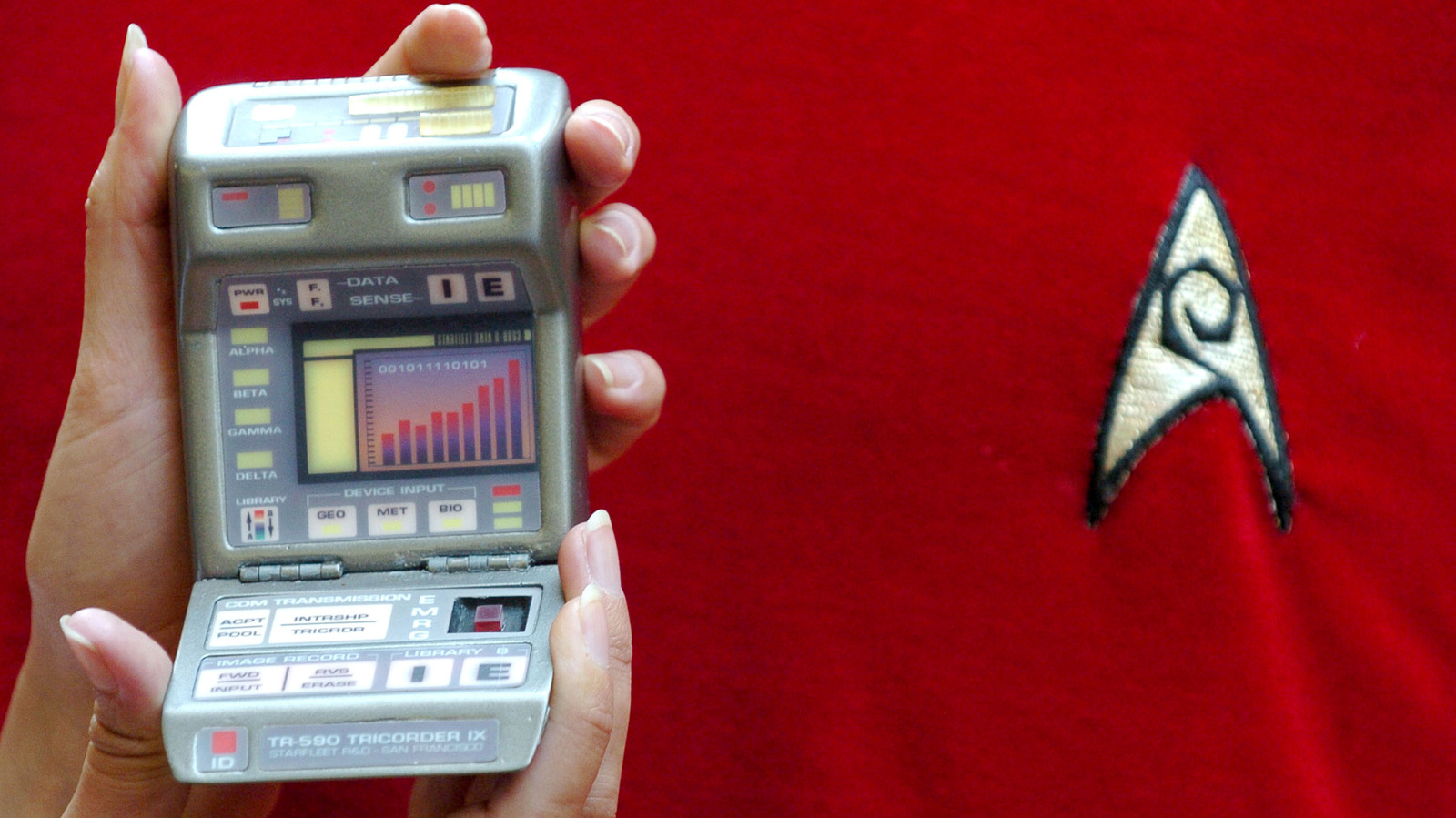
“Star Trek” tech seemed out of reach when it was first presented, but today much of it is old hat. Doors whooshing open without buttons or handles, hand-held (or wristwatch) communicators, and “padds” used to share written or visual material surround us everywhere. In some cases we’ve soared far past Trek Tech: We think nothing of wearable smart devices that can measure our heart rates and sleep habits or 3-D food printers that can turn potato paste into amuse bouche appetizers at the touch of a finger.
Many of the Trek-come-true ideas were part of (or later versions of) the series writer’s “Bible,” originally created by Gene Roddenberry with the support of Trek luminaries like Michael Okuda, Rick Sternbach, and Dorothy “D.C.” Fontana. The document contains a vast storehouse of Trek information and has expanded vastly over the years with increasingly complex details about ships, species, and both Starfleet and alien tech.
It seems unlikely that we’ll see a fully functional Emergency Medical Hologram anytime soon. And the transporter, while not absolutely outside the realm of possibility, was actually developed to save the cost of showing the Enterprise landing on planet after planet. But many of the concepts we see, particularly in the Original Series, drew from science and science fiction of the 1960s. Many of the ideas expressed in these early episodes (and even some that emerged in later series) are already in our pockets or underway.
Hyposprays: what was old is new again
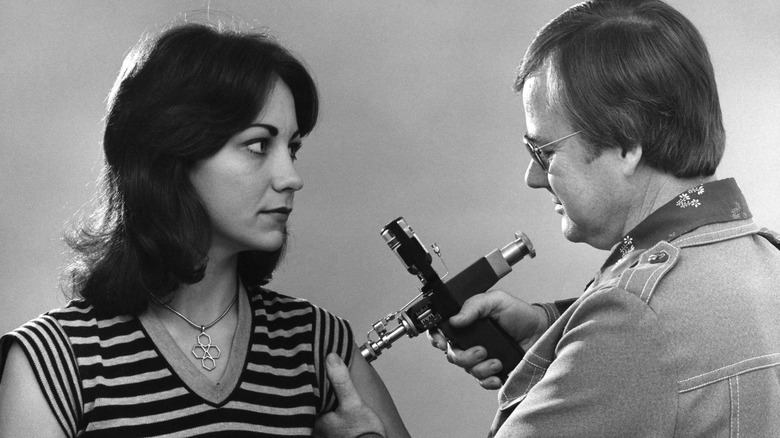
When Dr. McCoy injected patients with amazing cures to alien viruses, he used a hypospray rather than a hypodermic needle. Many of us were envious, but few knew that hypospray technology, otherwise known as jet injection, had already been invented. Unlike McCoy’s version, it couldn’t (and can’t) inject medicine through clothing, but it is in use under several names for multiple situations. According to the Memory Alpha site, the Star Trek version of the hypospray was designed to look a bit like an inhaler.
The first jet injector was invented in France in 1860, though the model that the “Star Trek” version was based on came from a 1943 patent filed by M.L. Lockhart. Lockhart’s idea may have come from an industrial accident in the 1920s, during which a man was accidentally “injected” with diesel fuel.
Pick up a Universal Translator today!

With very few exceptions, “Star Trek” technology made it simple to instantly translate any alien language into standard American English and back again. In fact, the unexpected inability of the universal translator to allow instantaneous, idiomatic communication is what made the “Next Generation” episode “Darmok” so poignant, as it ends (spoilers!) with an alien commander giving his life to ensure communication between two peoples.
When the original series was under development, nothing similar to a universal translator existed — with the exception of talented human translators. Over the years, of course, new translation technology was developed. Google Translate in particular has become a common tool for communicating between people who don’t share a language. But even that is a far cry from instant, effortless communication. Today, AI and Large Language Models (LLMs) are actually bridging the gap between “talk into this smartphone” and a real-world version of the “Star Trek” universal translator.
LLMs are deep neural network frameworks that use AI to generate natural language and flexible responses to queries. Working almost instantly, LLMs encode and decode complex language by breaking down and building up tiny units of text in the form of symbols. Even better, there’s no need to hold up a device and ask your conversational partner to read text; instead, you can use earbuds to provide instantaneous translation. Of course, both conversational partners need to wear the earbuds to make conversation work, but in practice the experience is almost as quick and seamless as a real universal translator.
The holodeck is (not quite) available
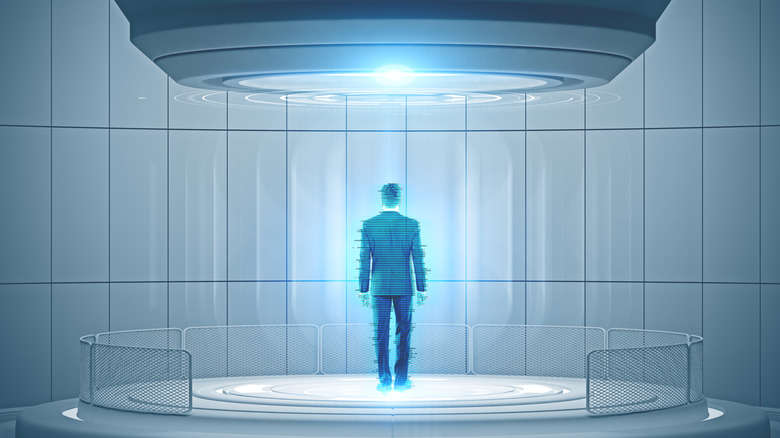
Holodecks are fantasy, and as of today no one can create a fully solid human being out of photons. It’s even less likely that we’ll ever create a functional, empathetic, insightful holographic human character like Vic Fontaine from “Deep Space Nine.” That said, however, there are many aspects of the holodeck, such as endless physical exploration of an interactive environment, that are already in use.
One interesting experiment with such technologies is the “Holodeck Experience” at the Milken Center for Advancing the American Dream in Washington, D.C. There, visitors can explore a 3D interactive presentation called the “Perpetual Story Machine.” This project was complex and difficult to complete, and required some serious technology including LIDAR (Light Detection and Ranging) to create virtual models. In essence, however, this is really just interactive touchscreen projections – not even close to the real deal.
One of the coolest visions for creating real holodecks today is at the NYU Holodeck Future Reality Lab where multiple participants can explore “metaroom” environments using Oculus Quest headsets. While “in” the metaroom, users interact with shared experiences — and the hope is that these types of applications can be expanded dramatically to include robotics and physical interactions.
Chatting with your computer buddy
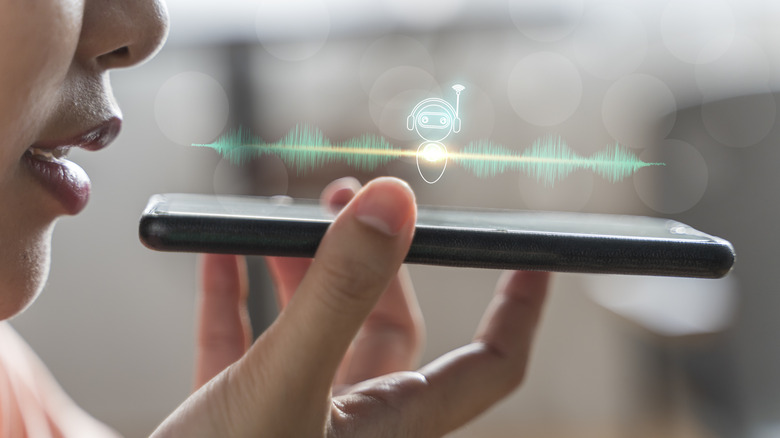
Voice activated computer interfaces were everywhere in the “Star Trek” world. In a cute one-off original series episode “Tomorrow Is Yesterday,”, the computer — having been updated by women – called Captain Kirk “darling.” Decades later in “Star Trek: Discovery”, a sentient computer called Zora installed in the eponymous USS Discovery took action on her own, occasionally saving the day.
Voice interactions with computers are nearly as ubiquitous today. New technology is making it easier than ever to connect with an eerily realistic digital companion who can chat every bit as well as the “Trek” computers; Siri and Alexa are just the tip of AI revolution. Just as importantly, we can now use voice commands to tell our computers what to do and how to do it.
Going even farther than the “Star Trek” world, we are now using AI to provide us with therapy, companionship, and even simulated love. The sense of reality is increased when we interact through voice rather than text interface. Some of the best options for creating that nearly-real person-to-person experience include Google’s NotebookLM, OpenAI’s Advanced Voice Mode, and Hume AI’s EVI 2. Open AI is working something called Emotional <a href="https://aitoday7.com/apple-sues-openai-alleging-artificial-intelligence-company-stole-trade-secrets/” title=”Apple sues OpenAI, alleging artificial intelligence company stole trade secrets”>Intelligence, while Hume AI’s Empathic Voice Interface is intended to respond to emotions expressed both in words and tone.
Real-world humanoid robots
In “Star Trek,” humanoid robots are fairly common. In the original series, the episode “Requiem for Methuselah” features a beautiful and emotional young woman, Rayna, who turns out to be a sentient robot. “The Next Generation” features the android Data (and his evil twin Lore). Their mechanical status is even the basis for several interesting episodes about whether or not they should be considered “people” under the law.
Up until recently, humanoid robots have been the stuff of science fiction. Robots have looked and behaved like the useful machines they are, although many have enhanced abilities such as LIDAR-enhanced vision. Typical robots help humans with tricky surgeries, difficult or dangerous manufacturing chores, and activities carried out in hostile environments. Today, however, quite a few companies are producing humanoid robots with AI operating systems, though none of these would ever be promoted to Commander in Starfleet.
Perhaps the most famous current android is the Tesla Optimus. One of Elon Musk’s brainchildren, Optimus is supposed to look and behave like a real human being — though so far it seems to be closer to a really cool remote-control toy. While Musk suggests that these robots will be able to do just about anything from babysitting to manufacturing products, the jury is still out on its abilities.
Meanwhile, universities and cutting-edge companies around the world are working on a wide range of humanoid, AI-enabled robots that can do surprising things. Ameca, created by Engineered Arts, doesn’t walk much but does have the ability to detect and respond to emotions. G1, by Unitree, is bipedal and agile. NAO, a product of Softbank Robotics, is a humanoid, bipedal robot that’s already at work in classrooms and healthcare settings.
